Explore the collection
Wall art for a kitchen
1 artworks
Bring an image into a suitable kitchen display position, choosing the practical location before considering colour and composition.
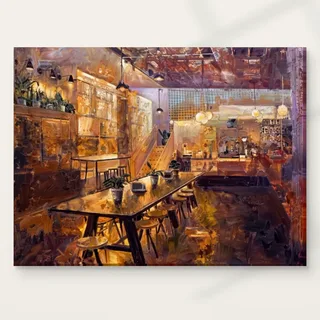
Artwork Golden Glow Cafe Interior Impressionist
From £23.00
45.72 × 30.48 cm · Rolled canvas
View artworkA considered choice
Keep the artwork separate from the working surfaces
Avoid positions exposed to heat, cooking grease or splashing water. A print is a display object, not a washable kitchen surface. If the available wall is close to a hob, sink or other persistent source of moisture, choose a more suitable location before ordering.
Compare the image's main colours with cabinets and worktops, and check whether small details will be visible from the room's usual standing or seating positions. Read the actual material and presentation information instead of assuming a protective finish makes a print suitable for every kitchen setting.
A guide to kitchen wall art
Read more: A guide to kitchen wall artRead less: A guide to kitchen wall art
Kitchen wall art works best when you choose a place for it before choosing a picture. Start with the walls that stay clear during cooking and washing up. Then consider which of those walls you can see easily. A picture near a breakfast seat can matter more than a larger one above a busy worktop.
Before you choose wall art for this room, run three checks for exposure, clearance and the view. A place can have good light and still sit in the path of a cupboard door. Likewise, a clear wall can be too close to a regular source of water. Treat suitable display space as the first requirement.
Check one: keep kitchen wall art away from daily exposure
Walk through the jobs you do, and don't judge the kitchen while it's idle. Notice where water lands while you rinse a dish. Then consider where steam gathers and which surfaces need regular wiping. For example, a wall may look dry most of the time, but cooking steam may reach it every evening.
Keep a print away from obvious sources of heat, grease and splashing. The Canadian Conservation Institute's basic care guidance for paper artwork explains why display conditions matter for paper prints. It does not rate the materials on this site for kitchen exposure. For that reason, choose a suitable location instead of relying on a protective finish.
If the only available wall faces a repeated problem, try the dry side of a doorway or the adjacent dining room selection. The picture can still be visible from the kitchen. However, it need not be part of a surface you use to cook, clean or prepare food.
Treat kitchen wall art differently from a splashback
A splashback serves a practical purpose and needs regular cleaning. A printed picture serves a different purpose. Even if you choose a frame, do not assume the edge, back or mounting hardware seals the print against moisture. Therefore, keep the display off the path of a wet cloth or cleaning spray.
To judge a borderline spot, notice how you use the surrounding wall. For instance, if you normally hang damp tea towels there, the place already has a job. Another nearby wall could let you see the same image without moving the towels or changing how you use the kitchen.
Check two: measure the clear space for kitchen wall art
Open the nearest cupboard and walk through the route you take when carrying food to the table. A door or your shoulder may use space that looks free when the room is empty. Then mark the intended frame outline. Check the space around it as carefully as you check the gap between the units.
Measure the visible image and the outside of the frame separately, if you intend to fit one. A broad print may clear the wall only until you add a surround. By contrast, a narrow print can fit beside a shallow cabinet without competing with its door. A folded sheet of paper makes it easy to test both shapes.
Look at the depth of the proposed frame too. A paper rectangle lies flat, while a finished piece can project into the room. For example, an alcove with shelves may have room for the width but not for the depth you expected. Use the dimensions and fitting instructions for the finished item before deciding. If you cannot confirm a secure fitting for the wall, consider another position.
Give the picture its own space near a shelf
A shelf can hide a corner from a low seat even when the artwork sits above the top of the furniture. For example, jars and mugs can change position over a week. Try the outline with the shelf in normal use. If the bottom edge repeatedly disappears, compare another height before choosing a bigger print.
Wall art can be a focal point without claiming the whole wall. Make room around it for the objects you actually move every day. For instance, an image at the dry end of a breakfast counter can still be visible from the cooking area while leaving the working side free.
Check three: test the everyday view of kitchen wall art
Stand by the doorway and look where you normally look first. Then try the same view while you sit or lean at the eating end. If the picture would usually sit beyond open cupboard doors, check it with those doors open. The larger surface is not always the easier one to see.
Next, compare daylight with the evening light you actually use. For example, a pendant may create a bright region near the picture without illuminating the whole wall. A frame with glazing might also reflect a window from one seat. Check the angle before assuming you need a brighter image or another lamp.
If the kitchen and lounge share a wall, check that it works from both sides. For instance, a subject that reads clearly on the way in might feel too busy from a sofa. Use the living room wall art selection if you want the image to serve that view and not the working side of the room.
Compare the café scene as kitchen wall art, not as a room plan
Golden Glow Café Interior is the work currently featured here. Its foreground table points towards the back, where warmer lights sit above clustered forms. The broad horizontal image gives the table and the darker edges room to separate. Look for that diagonal if you plan to see it from the doorway.
The Courtauld's account of Manet's A Bar at the Folies-Bergère describes how a counter and mirror can shape a viewer's relationship to a room. It is a different artwork, not a claim of influence or authorship. Here, the forward edge of a table and the hanging lights offer simpler places to begin looking.
Notice how the picture's table continues beyond the point where its stools first catch the eye. That detail can help you compare a long horizontal print with the lines your room already has. For instance, a clear wall at the end of a row of cabinets can make the scene feel like a view into another space.
Try the café image beside pale wood if you want the cooler shadows to stay apparent. Meanwhile, deeper cabinet colours can make the amber areas easier to notice. However, you need not match the image to the cupboard doors. Instead, choose which part of the picture you want to read from your usual route.
Keep finish claims separate from where you place the artwork
When you choose artwork for a kitchen, pick a suitable wall before you decide between canvas and paper. Then review the format's dimensions and presentation. A roll needs a display plan of its own. The guide to Golden Ads print materials describes the choices without treating them as interchangeable.
If you search for hand made wall art, check whether you want a handmade original or a print with a separate process. We offer the café artwork as a print. Optional studio hand-finishing describes work on the print, not protection from water or grease. Do not rely on that choice to make an unsuitable wall suitable.
Frequently asked questions
Can kitchen wall art go above the cooker?
Choose a wall away from the cooking area. Heat and grease are reasons to shortlist another location. For example, look for a dry display wall by the seating area instead of placing a print on a surface that needs frequent wiping. A frame alone does not resolve the exposure.
Is kitchen wall art suitable above a kitchen sink?
Keep it away from regular splashes, and don't judge the spot only when the sink is empty. For instance, take note of where water reaches when you fill a pan. If you routinely wipe the proposed wall, choose another place where a printed piece can stay separate from washing up.
Would a frame make a paper print water resistant?
Do not assume it would. A frame is a way to present the print, not a promise of resistance to moisture. However, an appropriate frame can still suit a dry place. Check the framing and care guidance for the item you choose, and don't make assumptions from a photo.
What if I only have a narrow strip of kitchen wall?
Measure the strip with adjacent cupboard doors open. Then compare the image size and the outside of any planned frame. If a horizontal print cannot fit with clearance, move the proposed display nearer to a seat or into an adjoining room. Do not try to squeeze around a cabinet opening.
Can kitchen wall art hang opposite a window?
It can, but check both glare and direct sun at the times you use the room. For example, a frame might show a clear reflection from the breakfast seat. 151A wall beside the window may be easier to see than one opposite it. Choose the position before selecting the surround.
Is the café picture a photograph of a named location?
The visible design shows an interior with a long table and warm lamps. It does not identify a named café. So choose the scene for the way it shows colour and depth, and not for a place it might resemble. The product listing supplies the print options for that design.
Should kitchen wall art always show food or drink?
The answer is no. A café scene can connect naturally to a place where you eat. However, that is a choice about imagery, not a rule. 132A design with a clear shape works just as well when you prefer to look at colour or space more than at the objects on a table.
What if a nearby extractor fan keeps the room clear?
Think about the actual wall during ordinary use. An extractor does not establish a suitable display position next to a cooker or sink. For example, if the wall still gets damp or needs wiping, choose another place. The selected material's care requirements still apply.
Can kitchen wall art work beside dark cabinets?
Yes. Compare whether the picture's edge stays clear where it meets the cabinets. The warm tones in the café scene may stay easy to notice, even if its dark corners seem to merge with the wall. However, try a quieter surround if you want to see the whole composition from the entrance.
How do I decide between rolled and stretched canvas for the kitchen?
Start with the wall you intend to use and then check the exact product options. A rolled canvas needs a plan for mounting. In contrast, the selected stretched presentation has a different display purpose. Confirm the actual dimensions and finish; neither presentation makes a print a washable kitchen surface.
How should I position artwork near a breakfast table?
Look from the chair you use most, then check access to storage and doors. For instance, a picture can sit on the far end of a wall if you see it clearly from your seat. It does not need to line up with the middle of the worktop.
When should I decide not to display kitchen wall art?
If the only choices are a wall that repeatedly gets wet, a hot area or a narrow gap in the path of a door, choose another room. You may still see the picture across an open doorway. Consequently, you can enjoy the design without giving it a place unsuited to display.
Choose kitchen wall art for a place you can actually use
Start with exposure, confirm clearance and check your usual view. If a dry wall meets all three, look again at the café's wide shape and warm details. Then confirm the image dimensions, material and presentation on the listing before you order. If the wall fails the checks, try a different location first.