Explore the collection
Wall art for a dining room
3 artworks
Artwork can anchor the wall beside a dining table, with the table setting and evening lighting helping to shape how it is seen.

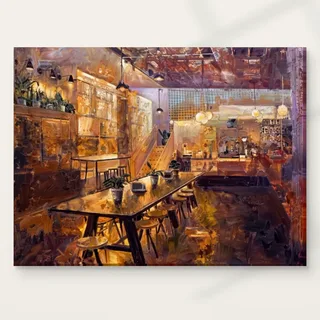
Artwork Golden Glow Cafe Interior Impressionist
From £23.00
45.72 × 30.48 cm · Rolled canvas
View artwork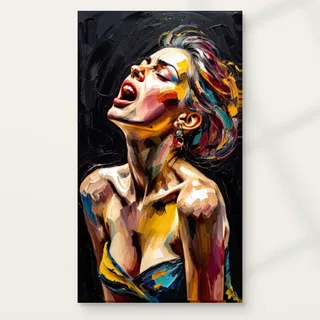
A considered choice
Check the composition from more than one seat
A dining room print may be seen across a table, beside a doorway and at an angle from another seat. Compare those views before choosing its position. Leave room for the furniture and any lighting fixture to remain visually distinct from the artwork.
Expressionist colour may provide a lively accent, while a related living room selection can help you compare a quieter direction. Decide how much attention you want the image to attract during everyday use. Check the selected print size against the wall instead of estimating it from a room visualisation.
A guide to dining room wall art
Read more: A guide to dining room wall artRead less: A guide to dining room wall art
Dining room wall art looks different to the person sitting at the end of the table and the person walking through the door. Begin with the view you use most. Then compare what stays visible from the other side, especially if a pendant or a tall vase overlaps the wall behind it.
The three prints here make that test concrete. One shows an interior that recedes into the distance. Another centres three stemmed glasses, while a third gives a face and a gesture almost all the attention. Before you order, decide whether you want the table, the picture or the conversation to set the pace.
Try dining room wall art from both ends of the table
Sit where someone usually eats, and don't use standing eye level as a rule. Look towards the intended wall with the table set as it normally is. Then move to the other end. For example, a small obstruction at one end can hide a large part of the artwork from the other.
Use a removable paper outline to mark a possible position. Draw the outer dimensions if you have already chosen a frame. Next, mark the approximate centre of the image, where you expect the main subject to sit. If the paper edge and the centre fall on very different sightlines, test both before moving the outline.
That practical check also helps when the room serves a second purpose. A print you enjoy from a chair may look fragmented to someone passing through to the kitchen. However, you do not need an equally direct view from everywhere. Choose which route should reveal the artwork last and which should show it first.
Compare three subjects for dining room wall art
Think first about how much the image asks you to notice. A room scene gives you several possible routes through the frame. In contrast, a still life can make a small set of objects feel important. A portrait may hold attention with a single gesture. Here is how those three approaches look in the current collection.
A café scene for dining room wall art that draws the eye in
Golden Glow Café Interior places a long table in the foreground. Beyond it, stools and hanging lights carry the eye towards the back of the scene. Amber tones sit among deeper browns. Consequently, the whole room has a sense of depth without depending on one bright rectangle.
For contrast, the National Gallery's account of Van Ostade's The Interior of an Inn discusses a painter who often depicted dim rooms with groups of people. The point of the comparison is how an interior can shape attention, not a claim of influence. Here the built space and the lights do much of the work.
From a chair, see whether the diagonal table in the picture points cleanly past your actual table. If the two edges visually cross, try moving the picture's outline sideways. Alternatively, place it on the shorter wall so you first see it as you walk into the room.
A still life for dining room wall art with a cooler backdrop
Gold and Blue Textures makes three overlapping glasses the large subject. Compare the bright openings at the rims with the dark blue towards the right. The stems repeat a shape without lining up perfectly. Meanwhile, the gold-coloured accents stand out from the blue surface underneath them.
The National Gallery's analysis of Cézanne's Curtain, Jug and Dish of Fruit shows how arranging ordinary tabletop objects can make looking itself the subject. In a dining room, try treating the glasses in this print as a distinct group. Their effect does not depend on your own tableware looking the same.
If you already keep glassware on a sideboard, compare the print beside it and not directly above it. For example, two groups of similarly shaped objects can be surprisingly hard to separate across a narrow room. A strip of open wall between them can help each group read on its own.
A portrait that changes the dining room wall art conversation
Woman with Open Mouth directs the face up and towards the left. Warm colours catch the forehead, cheek and shoulders, while blue and red run through the hair and clothing. The dark surroundings draw attention to the open mouth. You need not identify what the figure is saying or feeling to see the force of the pose.
Try this artwork from the seat facing the picture as well as from the doorway. It may work best where you want a quick, distinct focal point. However, if you prefer something less direct during a meal, try it on a wall seen as you enter. Then compare the long view offered by the café scene.
Give dining room wall art space around the pendant
A pendant can have two effects at once. It may light the table and also interrupt your view of the wall. Therefore, check the silhouette of the fitting when it is off, then look again when it is on. Make those checks from the side where people normally see the picture.
Consider reflections as well as shadows. For example, a glazed frame may reflect a visible bulb from one seat without creating the same effect at the next. An existing frame of a similar shape can help you test the angle. A paper outline shows what fits, but it cannot show how the finished surface reflects light.
If you also use the table as a desk, test your daytime position separately. A small shift may put the image behind a screen during the day but back in view at dinner. For instance, you may prefer a lighter area of the print next to the window instead of directly opposite it.
Use the part of the wall that stays clear
Measure the wall space that remains once the furniture and fittings have taken their share. Include any cupboard door that opens across the wall and the back of a chair pulled out from the table. Then compare the printed image area to that useful space. Add the frame or mount separately, because the image dimensions don't give you the outside measurement.
Wall art does not have to fill the width of a sideboard. For example, a tall arrangement may work at one end if the other has a clear purpose, such as space for serving or a lamp. Keep enough room to move between the table and wall without reaching past a display.
Match presentation to the finished room, not the preview
When you choose artwork, check the material and presentation on the specific product. A rolled canvas does not arrive stretched. Likewise, a paper option has its own measurements and mounting requirements. Compare the dimensions of the image and the full item supplied, particularly if you have already chosen a frame.
If you search for hand made wall art, check whether you mean an original or a print with extra work on its surface. An image with thick-looking marks does not settle that question. Where offered, studio hand-finishing on canvas is a separate choice. Check it directly, and don't treat the painted effect on screen as a promise.
Frequently asked questions
Should dining room wall art hang exactly at standing eye level?
The answer is no. Start with your most frequent view. For instance, an artwork that seems well placed at standing height may sit above your comfortable sightline during a meal. Use removable guides to compare the top and bottom of the frame from seated and standing positions before deciding.
What if the table has an extension leaf?
Try the room in both positions. Then look from the seats you add when the table extends. If one end of the arrangement looks unbalanced, consider a centre line based on the wall and not on the length of the table on a given day. Keep access to the chairs clear.
Does dining room wall art need to show a food or drink subject?
The answer is no. A still life can echo details already in the room, but an interior or portrait can do something different. For example, a bright face may give a plain wall more energy than a group of objects. Start with the look you want, and forget about the subject people expect in this room.
Can the café print make sense beside a real café-style table?
Yes. The useful comparison is between the direction of the pictured tabletop and the position of yours. However, the scene does not need matching furniture. For instance, contrast it with a simple surface if you want the hanging lights and warm patches in the print to stay distinct.
How do I check dining room wall art with dark walls?
Look for where the image separates from the wall. The darker edges may blend from a distance even if its central colours stand out. Then see whether a lighter surround helps. A print does not have to become lighter overall for its outline to be legible.
Can I choose dining room wall art for an open-plan living space?
Yes. Look from the dining chair and the living area before committing. If the wall serves both, decide how much attention you want the artwork to take from each side. You can also compare the living room selection when choosing a less table-focused direction for the same wall.
Do the gold tones mean the still life contains metal?
No physical metal follows from the picture. Bright marks make the glasses and their reflections legible; they are visual details. Similarly, the dark blue sets those details off without specifying a material. Read the actual print and finish description if you want to know what the item contains.
Is a horizontal artwork always better over a long table?
The answer is no. A long table is only one line in the room. If pendant, table and sideboard already stretch across the space, an upright subject can break that repetition. By contrast, a wide café scene can continue the line. Put both shapes on the wall as outlines and compare the result from a chair.
Will a bright pendant make framed dining room wall art difficult to see?
It can, depending on the position, the frame and your view. For example, a reflection may appear as a bright shape over the main subject. Check from the seats you actually use with the light on. If necessary, try another position before changing the fitting or the artwork.
Can the portrait work next to a striped fabric chair?
It can. Compare the direction of the stripes with the movement in the face and hair. If both compete for attention, leave some visible space between the chair and the print, because they can still work together. Alternatively, use a frame with a quieter edge to keep the portrait distinct.
Should I estimate the size from a gallery room image?
The answer is no. Use the product's measured artwork size. Then allow for your particular frame or mount. A digital room view may show a different proportion of wall, and it cannot tell you how close the print will sit to your lamp or table. Measure those actual clearances before ordering.
What should I order if the room is not ready yet?
If you haven't settled the table or the lighting yet, don't guess from a room plan. First, shortlist an image and verify the available sizes. Then select a presentation only when you know the useful wall area. If you choose a rolled print, allow for mounting as a separate step.
Choose dining room wall art for the table you use
Identify the view you care about most, then check it from at least one other seat. Decide whether the café's depth, the glasses' clear shapes or the portrait's direct energy suits the room. Finally, match the selected image size and presentation to the available wall before you order.