Explore the collection
Wall art for a bathroom
1 artworks
Artwork can add character to a suitable dry bathroom display area, but the position and conditions matter as much as the image.
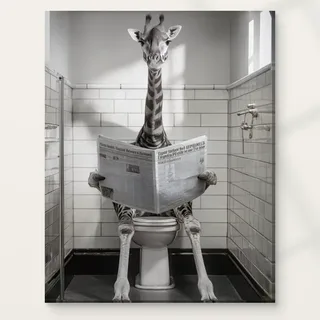
Hand Finished Artwork Giraffe in the Loo Surrealist
From £23.00
30.48 × 45.72 cm · Rolled canvas
View artworkA considered choice
Choose the display position before choosing the print
Keep printed artwork away from direct splashes, wet walls and persistent steam. These prints are not sold as waterproof furnishings. If your proposed location remains damp, consider displaying the work in another room instead of relying on a material or finish to solve the conditions.
For a suitable dry position, check the space around mirrors, cabinets and door openings. A smaller composition can still have a clear presence when the surrounding area is limited. Read the material information and select from the dimensions actually offered for the chosen artwork.
A guide to bathroom wall art
Read more: A guide to bathroom wall artRead less: A guide to bathroom wall art
Bathroom wall art can give a plain room a moment of surprise. First, find a genuinely dry place to put it. A bathroom print does not have to hang beside the bath, above a basin or inside the room at all. The picture and the wall need to work as a pair.
The Golden Ads selection here centres on one monochrome scene: a giraffe reading the newspaper in a tiled loo. The joke feels natural when you see it near an ordinary bathroom. However, the print needs a suitable setting, not a spot that gets wet. Check the wall, the sightlines and the fit before you order.
First check: find a dry location for bathroom wall art
Look at the room after you have used it normally. Note where droplets appear and where surfaces stay damp longest. A wall may look fine in the morning but repeatedly collect condensation in the evening. So judge the spot while people use the room normally, and don't only look at it when it's empty.
Consider the immediate surroundings too. Water from a basin may land beyond the obvious wet area. A mirror that often stays fogged can be another reason to reconsider a nearby position. If a wall stays damp or regularly gets splashed, don't use it for this print. A suitable dry wall outside the door is often a more sensible choice.
The Canadian Conservation Institute's guidance on art on paper explains why humidity matters to paper-based art. Use that as background if you are considering a paper print. It does not certify any Golden Ads product, poster or canvas for a wet installation. Our print is not sold as a waterproof furnishing.
Do not treat a finish as a moisture rating for bathroom wall art
If your search starts with hand made wall art, separate the production description from the display conditions. 112A printed image, a frame and an optional hand-applied finish are three different choices. None of those descriptions supplies a humidity rating or makes an unsuitable wall suitable. Consult the Golden Ads description of the finishing process for what that work involves.
Read the studio guide to paper and canvas formats if you want to understand how the formats differ. Still, make the wall decision before the format decision. If you need something designed to sit close to water, choose an item made for that purpose instead of adapting a work that isn't.
Second check: compare two views of bathroom wall art
Start from the doorway. Look at the clear surfaces before you look in the mirror. In a small room, a mirror can catch the picture before you see it directly. That can be entertaining. However, a partial reflection can also cut off the feature that makes this particular print work.
Open the Giraffe in the Loo artwork and read the image from top to bottom. First, the long neck and head give you a recognisable form. Then the newspaper and toilet turn the scene into a joke. The orderly tiles make the strange combination feel like an everyday event.
The National Gallery's account of the Arnolfini Portrait gives you a different reason to inspect a reflected view. The painted mirror reveals details that the main view does not. Here, the reflection in your own room may do the reverse: it may hide the newspaper. Our wider surrealist wall art collection lets you compare other visual surprises if you prefer a different subject nearby.
See how bathroom wall art reads beside the mirror
Put up a removable sample outline if the dry surface permits it. Mark the upper part of the image and the newspaper position on the outline. You do not need to reproduce the picture. Then look in the mirror to see whether the two marks appear together from where you usually stand.
If you would rather have a single view of the artwork, try a wall outside the mirror's usual field. In contrast, if you enjoy catching a glimpse twice, choose a place where the reflection reveals a meaningful part of the scene. A few moments of testing can explain why one wall feels right and another feels cluttered.
Monochrome artwork can still look very different against warm paint and cold tile. For instance, the middle greys may look softer by a warmly lit mirror. Check the artwork's preview beside the finishes that stay in the room. Avoid expecting a screen or a paper sample to show the final print's colour exactly.
Third check: measure the finished bathroom wall art and its surroundings
Measure the actual dry area, and don't measure the full length of a tiled wall. Begin with the things that already occupy the space. A medicine cabinet door, a towel rail or a shelf may define the usable width better than the corners of the room. Keep those objects working as before.
Allow room for the chosen presentation too. A print measurement alone does not tell you the outer dimensions of an added frame. Likewise, a sheet of paper shows little about how far a frame could project. Consider the full outline and depth that you expect to put there. If the wall or fitting cannot support it, select a different location.
Wall art is easier to place when nothing needs to move to make it fit. For example, test the cabinet in its normal open position instead of assuming it will stop short of the picture. Do the same with an often-used hook. Leave enough room that hand towels and cleaning cloths do not pass across the work.
Choose between a small bathroom wall art display and another room
Before you order, decide whether the space you have leaves enough of the original scene visible. A small print can work well in a dry guest loo if you see it clearly from a short distance. However, choosing a very narrow gap just to keep the artwork in the room may hide the effect you like.
If your home has no suitable bathroom wall, consider the dry side of the doorway. The hallway artwork selection shows other ways to use that kind of transition space. The same giraffe still makes sense there. Visitors may then spot the joke on their way to the room, before they even step inside.
Try the position while you carry out the usual routine
An empty room can make a place look easier to use than it is. For example, a hand towel might sit flat at first and spread out when someone reaches for it. The usual cleaning routine can also use a shelf that looked spare. Keep everything in its normal place for one check.
Then look once in daylight and once with the everyday light switched on. The tiled background can be visible in one view and flatten into grey in the other. If the newspaper stops reading as a separate shape, move the artwork to a new position and leave the room as it is.
Frequently asked questions
Is bathroom wall art from this selection waterproof?
The answer is no. Do not put the print where it will get wet or stay damp. In particular, an ordinary picture frame or a selected finish does not give the product a waterproof rating. If the room offers no suitable location, choose a dry wall elsewhere and keep the artwork out of the wet area.
Can I hang bathroom wall art in a downstairs loo?
A downstairs loo can be a sensible place to look for a dry display wall, especially if it has no bath or shower. However, check how people use the basin and whether the wall tends to get damp. The room's name is less important than what happens in the particular spot.
Can bathroom wall art go directly over the bath?
Don't choose a position where splashes or constant steam could reach the artwork. A wall over a bath often has both problems. For this print, look outside the wet area. If you can't find a dry spot, hang the picture somewhere else and don't force an unsuitable wall to work.
Does bathroom wall art have to match the tiles?
The answer is no. The tiled scene provides its own pattern. If the walls are already busy, a simpler clear background can help you read the image. Conversely, muted tiles may leave enough space for the picture to introduce the strongest pattern. Judge the pairing by looking at the whole group, and don't try to match a single grey.
What should I check if a mirror faces the print?
Find out whether the image appears whole or cropped from the position you normally use. For instance, you may see the giraffe's neck but not the newspaper. If that matters to you, move the outline to a spot with a clearer reflection, or choose a wall with a better direct view.
Is the grey palette too dark for a small room?
That depends on the light and the surrounding paint. First, look at the preview under the sort of light you use in the room. Then compare its darker masses with the wall. A pale wall can give them more definition. A darker wall can be effective if the central silhouette still reads clearly.
Why is there only one artwork in this collection?
The page groups the current artwork selected for this display suggestion. It is not a list of waterproof products or a rule about the only subject you can choose. If you would prefer another image, consider it on its own merits and use a genuinely suitable dry place for the display.
Does the example room photograph show what comes with the print?
Use the example to understand the relationship of the image to a room. It does not establish that furniture, framing or accessories are part of the selection. Review the listing and the chosen presentation before ordering. If the option does not describe an extra item, do not count it in your display plan.
How do I decide whether to use a frame?
Compare the extra outline and projection with the room you have. A frame may visually separate the scene from patterned tiles. However, it also takes up space and does not turn the picture into a waterproof fitting. If you need exact fitting or size details, check the frame separately and don't make assumptions.
Can I choose bathroom wall art that does not depict a bathroom?
Yes. A subject that suits the rest of your home may be a better choice. For example, a quiet picture on a dry wall can work without referring to anything in the room. Here the giraffe offers an explicit visual joke, but you do not need a joke to make the placement work.
Where should I put the outline if two people see the room differently?
Test from the doorway and then beside the basin. Compare which important part is visible from each position. If one view cuts the scene in half, decide which view matters more. Alternatively, a nearby dry wall can offer a more complete view from several ordinary positions.
What if I notice moisture after hanging the picture?
Move the print to a dry location instead of leaving it in repeated damp conditions. Then reconsider the position from the beginning. A wall that looked dry at a single moment can behave differently during normal use. Avoid treating a replacement finish as the answer to an unsuitable display environment.
Choose bathroom wall art only after the wall checks
Choose a dry spot first, consider the direct and reflected views next, and measure the full presentation last. If the giraffe reads clearly in that position, revisit the product above to choose an available format. Otherwise, keep the image on your list and look for a drier wall where the scene can still make you smile.