Explore the collection
Wall art for a bedroom
8 artworks
Choose a bedroom image around the colours and visual activity you prefer instead of assuming every restful setting needs the same kind of art.

Artwork Crimson Tresses in Brush Expressionist
From £23.00
30.48 × 45.72 cm · Rolled canvas
View artwork
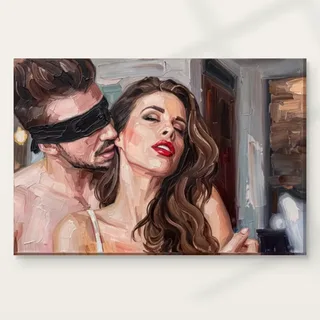
Hand Finished Artwork Blindfolded Whisper Expressionist
From £23.00
45.72 × 30.48 cm · Rolled canvas
View artwork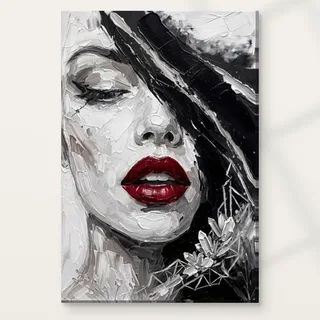
Hand Finished Artwork Crimson Lip Captivation Expressionist
From £23.00
30.48 × 45.72 cm · Rolled canvas
View artwork
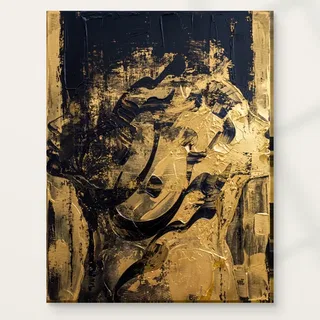
Hand Finished Artwork Turbulent Azure Strokes Abstract
From £23.00
45.72 × 30.48 cm · Rolled canvas
View artwork
A considered choice
Compare the print with the room's evening setting
Consider the lighting you actually use in the bedroom, alongside bedding, curtains and nearby furniture. A darker image and a light, open composition can create very different relationships with those surroundings. Compare the palette and contrast under both daylight and your usual evening lighting.
Measure the intended position and check how much of the image you will see from the bed and doorway. Surrealist scenes invite attention to unusual details, while abstract work can centre the choice on shape and colour. Available print dimensions remain specific to each artwork.
A guide to bedroom wall art
Read more: A guide to bedroom wall artRead less: A guide to bedroom wall art
Bedroom wall art has to work when the curtains are open and when only the bedside lamp is on. Start by choosing which view matters most. You might see a portrait clearly from the doorway, yet notice only its brightest colours when you sit on the bed. Make both checks before choosing a size.
There is no rule that a bedroom needs pale colours or that every dark print will feel heavy. Before you order, compare where the strongest shapes sit in the image. Then decide whether you want the picture to hold your gaze at night or stay quietly in the background.
Test bedroom wall art where you actually see it
Pick two ordinary positions, and don't judge from the middle of an empty room. For example, stand where you open the door and then sit where you read. Put a removable paper outline in the proposed position. Check whether the bottom edge disappears behind a pillow, lamp or piece of furniture.
Change only one thing at a time. First try the same outline higher or lower, without changing its width. Afterwards, see what happens if you use a smaller outline at the same height. Because the bed fixes most everyday sightlines, a modest shift can matter more than a larger print.
If you expect to see the picture from the bed, consider the opposite wall as well as the headboard wall. They do different jobs. One remains in view while you sit; the other is more visible when you enter. So use the real room, and don't decide from the shape of the wall alone.
Compare three approaches to bedroom wall art
Start with the doorway view. Decide whether you want a person looking back, a figure turned away, or a gesture you can see across the width of the image. These choices all appear in the collection, but the point of interest sits in a different part of each picture.
A warm focus for bedroom wall art
Crimson Tresses in Brush puts a pale face and vivid red-orange hair against a dark setting. The eye catches the brighter marks at the top, then the direct gaze holds it. Meanwhile, the cooler strokes across the clothing give the lower part some space away from the warm hair.
To try that look, put the portrait near plain bedding or a quiet wall colour. For instance, you could echo the warmth in one small object instead of matching it across the room. This leaves the artwork a distinct source of colour instead of making the whole room compete with the face.
A wide gesture when the wall is low
Embrace Against Brick arranges two bodies against pale masonry. The arms extend sideways. As a result, you read the relationship across the image more than up through it. Try this kind of shape over a low chest, where it has room to extend without claiming all the height above it.
Try not to line up the display only with the top of the furniture. Instead, put an outline in place and walk past. If a taller object hides one end, move it aside before increasing the width of the print. That gives you a clearer comparison of how the gesture occupies the wall.
A turned figure for bedroom wall art
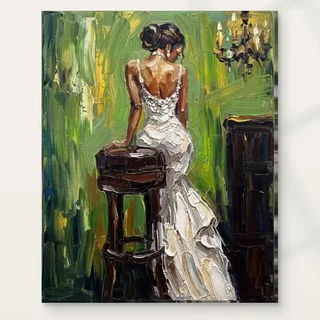
Bride in Ivy Light gives the white dress a strong outline against green marks. The figure leans near dark furniture and turns away from us. Unlike a direct portrait, this image draws you towards the surroundings as well as the person.
Because the dress and green areas sit close together, try the image beside a warm neutral or an existing green accent. For example, a room with a plain curtain can give the streaks in the picture more room. If bedding already has a strong botanical print, see whether the room feels more comfortable with one pattern leading.
Compare bedroom wall art in daylight and lamplight
Look at the wall in daylight, then leave the furniture where it is and switch to your usual evening light. In daylight you may distinguish several shades of green. By contrast, under a warm bedside lamp the brightest part of a portrait may stand out before those smaller differences.
Wall art near a low lamp can also show a difference between its top and bottom. For example, test the position with the lamp you actually turn on while reading. If one end of a broad image recedes into shadow, you may prefer the same print on the opposite wall. Try that shift before adding more lighting.
The National Gallery's account of Monet's Poplars on the Epte explains why he returned to the same subject under different light. Your print will not change its design between those checks. However, the light on it and the colours you see nearby can change what you notice first.
Leave prolonged direct sun out of the decision
Check whether a bright patch travels across the chosen spot over the day. The Canadian Conservation Institute's explanation of light exposure shows why pigment sensitivity and cumulative exposure both matter. It does not establish a fading timetable for any print in this collection.
If a wall receives prolonged direct sun, consider a nearby position that you can still see well. For example, a wall next to a window may get useful ambient light without the same moving patch. Then check the evening view again. Reducing exposure need not mean choosing a corner where you cannot see the art.
Size bedroom wall art for the furniture that will stay
Start with what is fixed. Measure the space between wall lights, shelves or wardrobe doors and mark those boundaries. Then compare the selected width and height of the image. Afterwards, account for any frame or mount you intend to use. The outside measurement can matter even when the artwork itself fits.
A narrow portrait may make better use of a strip beside a window. In contrast, a horizontal piece may suit a low run of drawers. However, an upright print need not go on the narrowest wall. If a room has spare width but little height, a wide, low piece can leave more empty wall above it.
Allow practical space for doors and drawers. Check an outline against the path of a wardrobe door before checking the artwork's colour against bedding. If you plan to hang above a bed, follow the fitting instructions for the finished item, wall and fixings. A mock-up can suggest position, but it cannot establish safe installation.
Let the material answer a different question
When you choose artwork for a bedroom, pick the image first and then think about how you will display it. A rolled canvas and a stretched canvas are different presentations. A poster can have different dimensions and mounting requirements. So use the options on the individual listing, because not every category card offers the same selection.
If you search for hand made wall art, ask what the seller actually did by hand. A standard printed piece is not a handmade original. Where the product offers an additional service, read how Golden Ads hand-finishes printed canvas. However, do not choose a finish solely because an image looks textured beside the bed.
Frequently asked questions
Should all bedroom wall art have soft colours?
The answer is no. A quiet room can make one vivid print particularly effective. However, a strongly contrasting pattern directly beside it can split attention. Try keeping one nearby area plain first. Then see whether a warm portrait or a gentler image makes more sense with the furniture you already have.
Does bedroom wall art have to go over the headboard?
The answer is no. An opposite wall lets you see the work while sitting up. A side wall can work better if your preferred spot sits beside a reading chair. For example, try the outline from the doorway and beside the chair before deciding which wall gives you the better view.
Is one large print better than a pair in a small bedroom?
One print can leave fewer edges for the eye to follow. Alternatively, a pair may work when a lamp or shelf interrupts the available width. Mark the complete arrangement, including the gap between frames. Compare both outlines before you choose, and don't compare one frame with only half of a pair.
How does a bedside mirror affect bedroom wall art?
It may reflect a lamp, a window or the picture itself. For example, a direct reflection can make a strong image feel as if you displayed it twice. Look at the mirror from the bed and doorway. Move the paper outline before making changes to the mirror or lighting.
What if the bedroom lamps make reds appear too strong?
Try a different wall or a smaller image before deciding against all warm colours. For instance, a red detail can sit well against quieter bedding without matching a headboard. Check under the lighting you already use. As a result, your decision reflects the real room and not the brightness of a device.
Can bedroom wall art go on a patterned wall?
Yes. Compare the scale of the wall pattern with the separate shapes in the image. A broad, plain area inside the print can be easier to read against smaller repeated marks. However, if the two patterns compete, try the same image near a plain area without buying another frame.
What if a portrait feels too direct from the bed?
Choose a turned figure or a design without a face. For example, a side view changes where the eye goes. You can also compare abstract artwork by shape and colour if a figure does not suit the sightline. Then check the chosen design again from your everyday position.
Can I line up prints of different heights above a chest?
Yes. Try lining up their centres, and don't force the top edges to meet. Alternatively, test a lower edge alignment if the furniture already gives the wall a strong horizontal line. Leave room for a lamp or seasonal objects. The spaces around the prints matter as much as their shared line.
Should I use the framed size shown in a gallery view?
The answer is no. A room image helps you imagine a position, but it does not establish your order's dimensions or frame. Instead, check the selected image size and the presentation on the actual product. Then add the measurements of any separate outer frame you plan to use.
Should bedroom wall art match the bedding exactly?
The answer is no. Bedding often changes more than the art. Try making the picture work with the wall or a piece of furniture that will stay. For example, echo one colour in a cushion if you like it. You need not repeat every shade that appears in the artwork.
Can a print hang beside a bedside wall light?
It can, if the fixture leaves enough clearance and the light does not make the view uncomfortable. First, check whether the fitting blocks a corner from where you sit. Then follow the appropriate fitting and display guidance. Avoid relying on a screen preview to assess the effect of glare.
What should I check before ordering a print for a guest bedroom?
Look from the doorway and from the edge of the bed. Then check whether drawers, luggage or a door will obscure the position. Before ordering, confirm the selected size, presentation and finish. For example, if you choose a roll, plan how you will display it before you need the room.
Choose bedroom wall art that works in both views
Compare a direct gaze, a wide gesture and a turned figure from your two usual positions. Look again with the lamp you actually use. Then use the dimensions on the chosen artwork to plan the wall. Order the size and presentation only when you know which part of the picture you want to notice first.