Explore the collection
Wall art for a hallway
16 artworks
Hallway artwork is often seen while moving and from an angle, making the approach to the image part of the choice.

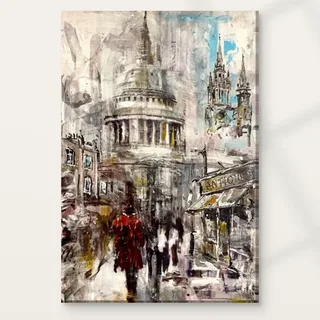
Artwork St. Paul's Under Grey Skies Expressionist
From £23.00
30.48 × 45.72 cm · Rolled canvas
View artwork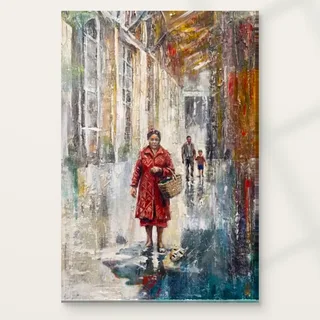
Hand Finished Artwork Woman in Red with Basket Expressionist
From £23.00
30.48 × 45.72 cm · Rolled canvas
View artwork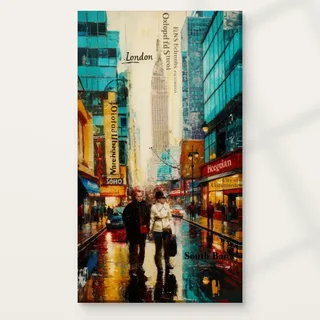
Artwork Woman in Vibrant Passage Expressionist
From £23.00
30.48 × 45.72 cm · Rolled canvas
View artwork
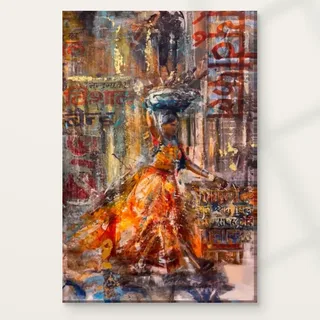
Artwork Celestial Chariot Procession Surrealist
From £23.00
45.72 × 30.48 cm · Rolled canvas
View artwork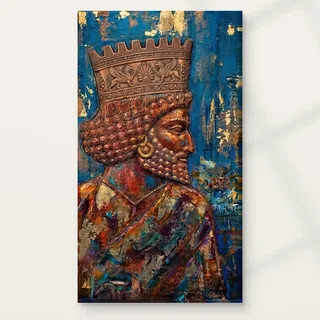

Artwork Twilight Over City Bridge Impressionist
From £23.00
45.72 × 30.48 cm · Rolled canvas
View artwork

Artwork Vibrant Dance in Silver Expressionist
From £23.00
30.48 × 45.72 cm · Rolled canvas
View artwork
Hand Finished Artwork Ornate Persian Script Abstract
From £23.00
45.72 × 30.48 cm · Rolled canvas
View artwork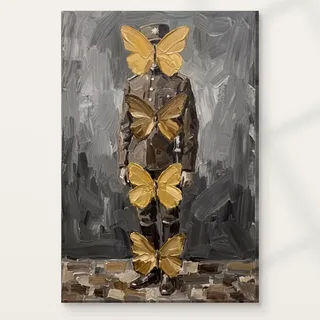
Artwork Soldier with Golden Butterflies Surrealist
From £23.00
30.48 × 45.72 cm · Rolled canvas
View artwork
Hand Finished Artwork Monochrome Muse Abstract
From £23.00
30.48 × 45.72 cm · Rolled canvas
View artwork
Artwork Canoe Through Textured Waters Abstract
From £23.00
30.48 × 45.72 cm · Rolled canvas
View artworkA considered choice
Consider the approach, not just the empty wall
Stand at both ends of the hallway and note what you can actually see. Door frames, switches and furniture can divide a wall into smaller display areas. Measure those usable sections, allowing for doors to open, before comparing the dimensions of a print.
A strong outline or clear arrangement can be appreciated in passing, while smaller details reward a closer pause. Urban scenes are one option for exploring directional lines; a reception collection may suggest a different welcoming focus. Choose the image first and confirm its presentation on the product page.
A guide to hallway wall art
Read more: A guide to hallway wall artRead less: A guide to hallway wall art
Hallway wall art often has a few seconds to catch your eye. You might see it through the front door, in passing, or from a room further along. Each view reveals something different. Try those views before deciding which picture deserves the clearest part of the wall.
A hall is also somewhere you use your hands. You carry bags, pick up keys and hold doors open. Therefore, start with how the space works on an ordinary day. Then decide whether you want a clear first impression, a picture that rewards a closer look, or a view that leads you further inside.
Three pictures to compare for hallway wall art
Pick the direction you usually walk first. From the entrance, a small feature may vanish into the rest of a picture. However, a clear outline can remain readable well before you reach it. Compare the next three compositions by what you notice first, not by how many details they offer.
Let hallway wall art draw the eye towards a dome
In St Paul's Under Grey Skiesthe pale dome rises above busy grey street forms. A small figure in red offers a warmer point nearer the foreground. Consequently, the building and the figure work at different distances. At the end of a passage, you may notice the dome first and discover the red mark as you approach.
For a comparison in how painted depth works, look at the National Gallery's account of Hobbema's avenue. The avenue draws your attention down a clear central route. The Golden Ads scene is not a version of that painting. Instead, compare where your eye goes after it finds the most recognisable form in each image.
Use a profile as a distinct piece of hallway wall art
Gilded Monarch in Profile takes a different approach. The face turns to the right, with copper-coloured details and a crown set against deep blue. As a result, the boundary between the face and the background can do much of the work at a glance.
Imagine the print just before a doorway. The profile's direction may carry your attention towards the opening. However, a clear stretch to its right could give the gaze room even if the door lies elsewhere. Move a paper outline from one side of the opening to the other. Then choose the position where the shape feels least crowded.
Compare a bridge when choosing hallway wall art
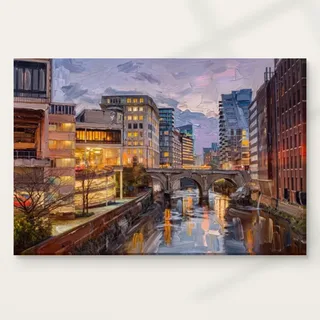
In Twilight Over City Bridgewarm points of light follow the crossing above cooler water. The design spreads across the width and has no single upright outline. Therefore, it is worth comparing on a long open wall, especially if you can see that wall from the opposite room.
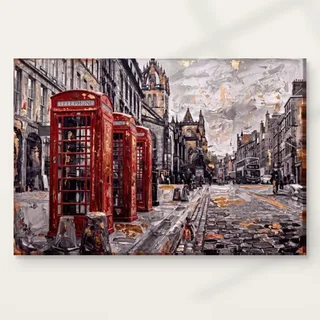
Conversely, a narrow gap may leave very little space around a broad composition. Test the shape before choosing the option that fills the widest gap. The image will still suggest a crossing without reaching from architrave to architrave. If you prefer the deeper city view, use the same outline exercise with a more upright alternative.
Read hallway wall art from the threshold and the turn
Begin at the entrance in the daylight you normally get. Walk to the inner end of the hall without stopping. Note the first spot that stays in view for more than a moment. Then walk back. A doorway you could not see clearly on the way in may become the best viewing point on the way out.
The National Gallery guide to a Delft courtyard by Pieter de Hooch shows how an opening can frame a person and a view beyond. Try that idea with your own doorways. From the adjoining room, parts of the hall disappear behind the frame. Put most of the picture inside the part you can actually see.
A side wall might appear at a steep angle for much of the walk. In contrast, a picture at the far end often presents a clearer front view. Neither position has to win. One gives you an object to approach. The other can turn a quick glance into part of a familiar route.
Give hallway wall art clearance before choosing its size
First, trace where normal movement takes place. Open the nearest door as far as you generally use it. Check whether a handle, hanging coat or shoulder crosses the display area. Then measure the wall that remains after those movements, and don't start from the full width between corners.
Mark the outside of the proposed piece with paper. Include the surrounding frame if your selected presentation adds one. However, the paper shows only the flat outline. Consider the depth as well. A narrow passage can make the difference noticeable even when the picture fits one of the wall's measurements.
Check switches, hooks and access points separately. It is easy to plan an attractive picture above a console and then discover that a lamp cuts across it. For instance, position the lamp you use most often while testing the paper shape. Leave that working arrangement intact and move the artwork if necessary.
Check how hallway wall art looks in the evening
Many halls rely more on artificial light than neighbouring rooms. Therefore, repeat your first walk once the lamps are on. From a central mark, take a small step sideways. Notice whether the surface loses contrast or catches a distracting reflection as you move.
Consider the wall and the image together. A pale wall can make the blue behind the monarch stand out. Likewise, a darker paint colour may bring the lamplit bridge closer to the wall's tone. Neither combination has to match the rug, door or picture rail. The important question is whether you can still read the main shapes.
Wall art can also do a quieter job. It may mark the spot where you pause to pick up your keys, even if it isn't the widest surface. Therefore, take a look at the reception room artwork selection if the first clear view continues around a corner and into a room where guests stop.
Distinguish the image from its finish
When you order, the details on the product page tell you exactly what you are getting. Compare the image, format and presented options separately. A copper colour in a crown does not establish that the print contains metal. Similarly, a vivid patch of red need not tell you how the paper or canvas feels.
If you search for hand made wall art, read the Golden Ads finishing process before selecting a print. Compare what the printed image provides with the hand-applied work described for an eligible option. The two descriptions concern different stages. Neither the style of the image nor a category photograph proves how we finished a particular selection.
Before you choose wall art for a narrow hall, decide on the position first, then the size and finally the presentation. Then check those choices against the individual listing. If the piece would stick out into a busy route, try a different position, and don't rely only on the smaller size of the visible image.
Frequently asked questions
Which hallway wall art is easiest to see from outside the room?
Look for one dominant form, because a busy picture won't necessarily show more. For example, the outline of a dome might register clearly from a doorway. Try the position with the door at its usual opening, since a fully opened door can give you a view you rarely get.
Will hallway wall art work on the wall beside a door?
It can work if the edge and depth stay outside the door's path. Check the handle as well as the slab. Then repeat the check when you are holding a bag or a coat. That route can be wider than the one you take with your hands free.
Can hallway wall art sit over a shoe cabinet?
Yes, if you leave room for what people put on the cabinet. Test it with keys or the basket you normally keep there. Then view the outline from the doorway. That check tells you whether the lower part remains visible when the surface is in everyday use.
Should a hall picture line up with a dado rail?
Try alignment if the rail gives the wall a useful reference. However, the best gap may depend more on the nearest door or the visible part above a bench. Try two positions against the rail. Compare them along the route, and don't judge the line from a single point.
Is a bigger picture better at the far end?
A bigger image can make a detail easier to see, but the end wall still needs a clear margin. For example, two side openings may reduce the usable width. A distinctive silhouette can be more readable than a busy scene that extends almost to both edges.
How can hallway wall art suit more than one doorway?
Check what each doorframe cuts off. If both viewpoints leave the main subject in view, their different crops can be useful. Otherwise, move the outline closer to their shared centre. A picture with its main feature near the middle can be easier to place in this situation.
Do I have to choose a matching pair for a long hall?
The answer is no. One piece can mark a turn or give the far wall a clear focus. However, if you like a pair, check whether you ever see both together. If you see one at a time, judge each against the light and furniture immediately around it.
What if a coat rack blocks part of the picture?
Make the test with the rack in normal use. A winter coat may take up more of the view than an empty hook. If the picture only works when the rack is clear, move it further along or choose a different wall. That way, both still do their jobs.
Can I use the same palette as my front door?
Yes, but it does not need to be an exact match. You might pick out a cool blue from the print next to a blue-grey door. Alternatively, let a warmer detail stand apart. Check both ideas from indoors, where you usually see the materials under different light.
How should I assess a spot near the stairs?
Look from stable positions you already use, such as the landing or the bottom of the stairs. Then consider the view from the adjacent hall. If checking or fitting the spot would require unsafe access, choose a wall that you can reach and maintain without working over the steps.
What is a useful check for a hall with very little daylight?
Use the light that usually stays on when you arrive home. Then look at the darkest part of the print from your normal approach. If several shapes merge, compare a picture whose biggest forms contrast strongly. A brighter accent is useful only if you can see where it sits.
Can I order the displayed arrangement as one item?
Treat images and presentation examples as guides unless the listing explicitly offers that combination. Check the selected format on the item page. For example, a room view can help you picture the work on a wall without establishing which accessories are part of the order.
Choose hallway wall art for the route you use
The dome, the monarch and the bridge reward different ways of looking. Start with the view you get most often. Then compare a clear first shape, a readable profile and a view that spreads across a wall. Use the product's own options to check what will suit the space.
Browse the collection above and return to a favourite from both directions through your hall. A good choice should still make sense when the doors are open, the lights are on and the room is doing its everyday job.