Explore the collection
Urban wall art
7 artworks
City scenes bring lines, movement and architectural detail into focus, from intimate street views to wider urban compositions.
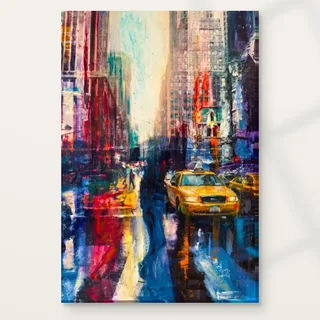
Artwork Yellow Taxi on Wet Street Impressionist
From £23.00
30.48 × 45.72 cm · Rolled canvas
View artwork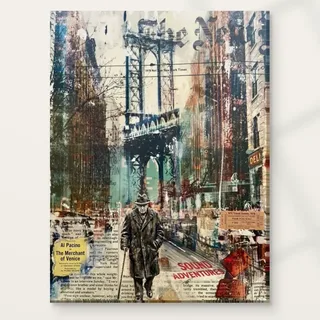
Hand Finished Artwork Watchful Figure Under Bridge Urban
From £23.00
30.48 × 45.72 cm · Rolled canvas
View artwork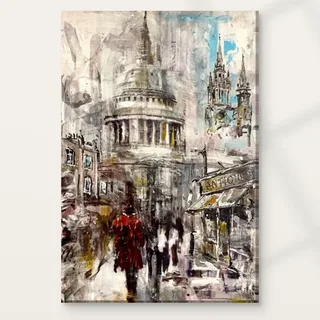
Artwork St. Paul's Under Grey Skies Expressionist
From £23.00
30.48 × 45.72 cm · Rolled canvas
View artwork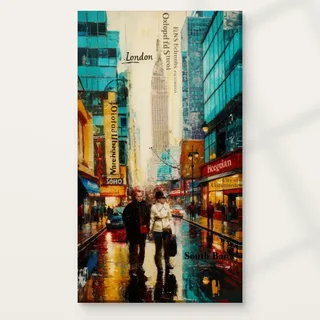
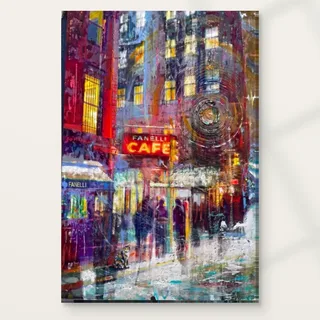
Hand Finished Artwork Neon Glow at Fanelli's Urban
From £23.00
30.48 × 45.72 cm · Rolled canvas
View artwork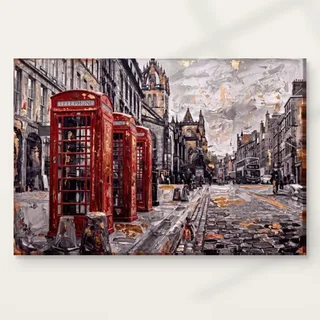
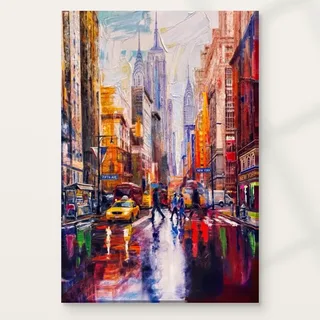
Artwork Rainy Day on Fifth Avenue Contemporary
From £23.00
30.48 × 45.72 cm · Rolled canvas
View artworkA considered choice
Choose a city view with the right sense of space
Look at the way streets, bridges or building edges lead through the image. A strong vanishing point can draw attention along a wall, while a tightly framed scene creates a more concentrated focal point. Judge that effect against the space around the proposed print.
Check whether the view will usually be seen straight on or in passing. Doorways, furniture and nearby vertical lines can change the balance of an architectural composition. Use the artwork page to compare the available dimensions before deciding on its presentation.
A guide to urban wall art
Read more: A guide to urban wall artRead less: A guide to urban wall art
Urban wall art can bring a familiar kind of movement into a room without simply showing a famous address. A taxi offers a burst of colour. A cathedral gives the eye a pause. A busy street gathers several small actions into one view. Start by asking which version of the city you want to keep looking at.
Before you choose from this collection, compare the complete scenes at the same scale. A detail that looks loud in a thumbnail can be one brief accent in the full picture. Then judge the image from the place in the room where you will see it most often.
Read the light before choosing urban wall art
Yellow Taxi on Wet Street gives the eye a bright vehicle on a rainy road. Reflected light is part of the view, not a decorative border around it. Follow the colour on the street and then the lit forms farther away. The scene has movement even if you first see it as a single patch of yellow.
The cab works differently close up and across a room. From farther away it is a point of colour; closer, the surrounding reflections take more of the attention. So judge the space around the cab, and look beyond the car itself. That space helps the image suggest a street you could move into.
Use the colour in urban wall art without copying it around the room
The brightest part of a picture does not have to supply an exact colour for a cushion or a wall. Instead, decide how often you want to see that accent. A brighter subject beside neutral furniture can stay distinct. On the other hand, repeated strong patches around the room may make it less clear where to look first.
Compare a paper sample in the sort of light you use at home. A room may look muted during the day and much warmer at night. However, work with the broad colour relationship, because a phone screen can't predict the final print. The full design matters more than matching one glowing mark.
Let a landmark hold an urban wall art composition
St Paul's Under Grey Skies places the dome above the greyer forms of a street. A small area of red below gives the view another point of attention. Try finding the dome first and then noticing where the lower colour takes your eye. The building feels like part of a lived-in street and never looks isolated.
The National Gallery's account of Monet's Thames below Westminster shows how buildings and horizontal structures can give a hazy view a clear underlying shape. Use it to compare what keeps the place recognisable when details soften. It is a visual comparison, not a source or attribution for the Golden Ads work.
Look at scale inside urban wall art instead of only the size of the print
A large dome beside a much smaller figure suggests a difference in scale before you check any dimensions. Notice which one matters most to you. If you like that combination, place a size outline where you can keep both the upper and lower portions in view. Otherwise, a low cabinet or a high shelf may cut into the relationship you liked.
Then compare with a city image whose main feature sits nearer the foreground. The cab asks you to look into the street from its bright shape. By contrast, the dome is easy to locate higher up before you explore what lies beneath. These are different reading orders even when you choose a similar-sized print.
Find a rhythm among the people in urban wall art
Soho Streets and Reflections leads the eye along a street with moving figures and a tall structure deeper in the scene. It doesn't depend on a single car or a dome, so it gives you several points to follow. The figures and the colour shifts help the view feel occupied.
For a different treatment of ordinary city activity, consult the National Gallery's entry for Canaletto's Stonemason's Yard. The view includes the everyday work of stonecutters instead of treating the city solely as an architectural sight. Compare where the people sit against the buildings in each scene. Different periods can still invite a similar question about what brings a city image to life.
Give a busy piece of urban wall art a quieter frame of reference
Try the street scene beside large, simple shapes already in your room. For example, a plain cabinet may let a group of figures stand out better than a row of small decorative objects. Keep a useful gap between the picture and neighbouring items. Then look again from somewhere you can see the whole image.
A desk offers a closer view than an entrance. The home office artwork selection shows how viewing habits can help decide the position. If you enjoy finding one small part of the street at a time, choose a place where you can linger instead of walking past.
Decide what makes an urban scene personal to you
Wall art can recall a place without acting as a record of its streets. A viewer might respond to the wet road in Yellow Taxi while knowing nothing about the specific location. Another person might choose the cathedral shape precisely because it is recognisable. Both are useful starting points, but they lead to different choices.
If you're choosing artwork for someone else, ask whether the place or the atmosphere matters more to them. A subject tied to a particular memory may work even in a quieter palette. Conversely, someone interested in paintings of movement may prefer a busy street they have never visited. Compare the scenes themselves, and don't use a city name as a shortcut.
Keep the printed image and its finish separate
If you search for hand made wall art, look at how the original design, the print and any finish you can select differ. The Golden Ads finishing process guide describes optional work on eligible choices. Do not assume that a visible mark has physical depth, or that a city design is an original painting, based on the preview.
A light reflected in a wet road is part of the composition. The presentation you order determines the physical object. Check the individual item and its available options after deciding which scene you prefer. That order keeps a good visual choice from becoming an assumption about delivery or materials.
Compare a recognisable route with an unfamiliar street
Try looking at each image without reading its name. Mark the detail that gives you the strongest impression of space. Then read the title and see whether it changes what you notice. A particular address can be helpful if you want a reminder of somewhere, but the composition ought to work even without a caption.
If the print is for a shared room, ask another person to point to the scene they would recognise the next day. They may remember a much smaller feature than the one you picked. Consequently, you get one more useful way to compare the designs before looking at the measurements.
Frequently asked questions
What makes urban wall art different from a skyline picture?
A skyline often lets buildings make one long shape against the sky. Urban pictures can also place you among people, vehicles and nearby buildings. Here, the three comparisons include a bright foreground car, a landmark seen over the street, and a closer view of activity. A skyline is only one possible city subject.
Is urban wall art suitable for a room without modern furniture?
Yes. You can compare a city scene with older furnishings by considering light and dark or repeated shapes. For example, a scene in restrained greys may work beside warm wood without matching its period. Look at the relationship from your usual seat, and don't rely on the catalogue label.
Should urban wall art show a place I know?
Only if that connection matters to you. A recognisable building can be a reason to choose a work. However, the sense of rain, street lighting or distance can be just as strong. Decide which detail draws your attention, then check whether the picture still appeals without the name beside it.
How do I use urban wall art in a narrow room?
Start with the largest shape you can see without backing against the opposite wall. A scene with one bright or well-defined feature may feel clearer from close by. Alternatively, use a view with smaller details where you sit regularly. Keep furniture from screening the part that makes the scene work.
What should I compare in two pictures of rainy streets?
Compare where the reflections lead, and don't simply count the bright areas. Some reflections point towards a vehicle, while others spread marks across a busy foreground. Then see whether the buildings stand out or dissolve into the background. That difference can change what the image brings to a room.
Will a darker city scene look too dim in the evening?
That depends on the display conditions and the picture. Look at the design in the same sort of light you generally use. If the larger shapes merge from the usual seat, compare a lighter wall or a more clearly contrasted subject. Do not treat a brighter mobile screen as a fair comparison.
Can I display urban wall art next to a landscape?
Yes. For instance, both may use a similar horizon or a gradual change in light. They need not represent the same kind of place. Leave a margin between them that lets each establish its own view. Then step back and decide whether there is enough connection without forcing a perfect match.
How can I choose between a cab and a cathedral picture?
First, compare the most prominent shape in each view. Then decide whether you want a quick warm accent or a strong piece of architecture that holds the picture together. The car and the dome are useful points of comparison without having to match the buildings or colours in your own home.
Will a street scene with people feel busy beside a desk?
It might, especially if a shelf or a monitor cuts across several figures from your viewpoint. Try the outline to one side as well as straight ahead. In contrast, a clear stretch of wall can give the small figures enough separation from the objects you already need to keep in view.
Does the display photo show the finish I will receive?
That isn't always the case. Treat the room image as a display example. Check what the product page says about the currently selected format and finish. Then measure for any presentation you add. This makes it easier to distinguish what comes with the chosen print from objects that only appear in the room view.
What is a useful way to choose a city picture as a gift?
Consider a place or an aspect of city life the recipient notices. One person may remember a specific building, and another may enjoy the colour of a wet road after dark. Choose the image first. Confirm the format you selected afterwards, and don't assume that a display photograph describes your order.
Can I choose by the artwork's title alone?
Use the title to identify the item, then check the complete picture before you buy. A title can name a location but tell you little about where the strongest lines or colours are. If an image is going into a particular room, use the actual scene to judge whether it fits.
Choose urban wall art for the view you want to keep
Think about whether you'd prefer the light of the car, the outline of St Paul's or the changing pace of Soho. Browse the collection above and open the full design before choosing a size. When the scene appeals both at a glance and from your usual spot, check the available presentation on that exact listing.