Living with art
A Red-Coated Figure for a Lived-in Hallway or Sitting Room
Plan Woman in Red with Basket around real routes, useful surfaces and a restrained accent strategy, with clear decisions about scale, framing and optional hand-finishing.
Where will the figure meet you during an ordinary day?
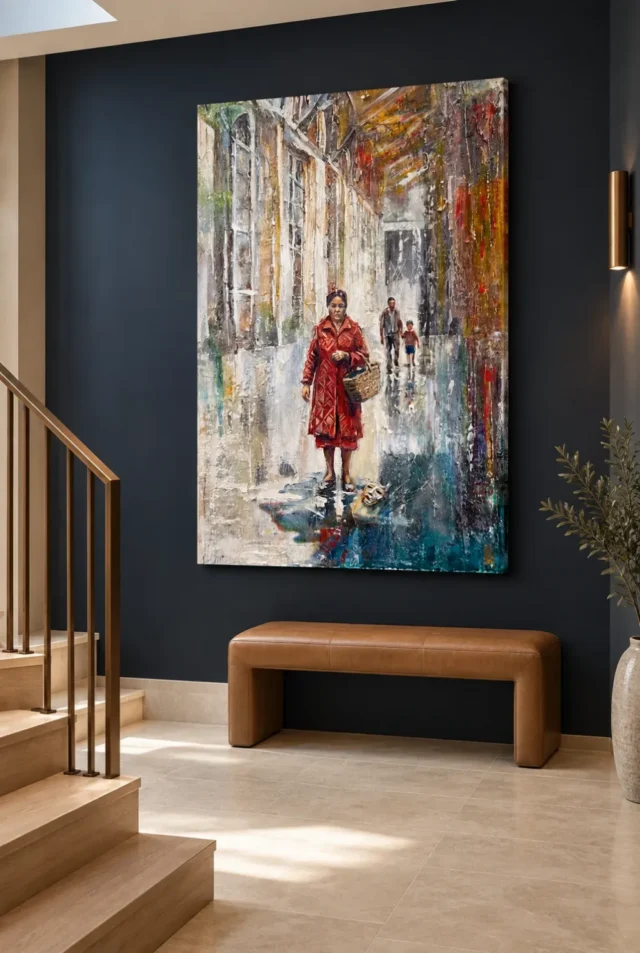
Woman in Red with Basket has a strong human accent that can register in a brief glance, making an arrival route one possible setting. Yet a hallway is not simply an empty gallery. People carry bags, open doors and move towards other rooms. Begin by walking those routes and noticing where the artwork could be seen comfortably. The red coat may attract attention quickly, while the basket and street details need a clearer or closer encounter. Decide whether you want the print to greet you in passing or reward a pause. That choice should guide the wall more than the general idea that bright art belongs near an entrance.
In a sitting room, consider the same question from a different rhythm. A work near a regular chair may become familiar through long, quiet views. Above a sideboard, it may be seen more often while moving through the space. The figure's relationship with its urban surroundings can support either experience, but the scale and lighting should suit the one you value. Look at the proposed wall while seated as well as standing. A print that seems clear from the doorway can be partly hidden by a lamp or furniture from your usual place. Real daily views matter more than a staged frontal photograph.
Keep the subject's story open. You do not need to decide that the woman is arriving, leaving or carrying a particular kind of errand into your home. The image can contribute a human city presence without becoming a symbolic instruction for the room. This is useful in a shared household, where people may respond differently to the same scene. Let the visible red coat and basket provide a starting point. The practical setting should support looking, while any personal narrative remains a response you bring rather than a fact the artwork is required to communicate.
How can one red coat be enough colour for the wall?
A strong red figure can supply a concentrated accent without requiring a red room. Before adding matching objects, view the artwork with your existing furniture and textiles. It may already create enough warmth or contrast. If you want an echo, choose one modest connection and test it from across the room. A book spine, small ceramic object or textile detail can be sufficient. Repeating red on every nearby surface may make the image feel less distinct and turn the figure into one component of a decorating pattern. The artwork's city field contains other visual relationships worth preserving.
Consider the quieter passages around the coat. They may connect with cool neutrals, timber or existing wall tones in ways that are less obvious but equally useful. A room can relate to an artwork through background and atmosphere, not only its strongest colour. This can be particularly helpful if you like the figure but do not want more red furnishings. Let the image hold that accent. The surrounding space can provide contrast through simpler surfaces or different materials. Coherence does not require every colour in a picture to be repeated somewhere in the room.
If repainting is already planned, use physical samples and assess them under the room's actual light. A red seen on a product screen is not a reliable specification for a large painted area. Scale and lighting can change its effect substantially. If the existing wall works, keep it. The print should not trigger a chain of changes unless you genuinely want those changes for the room itself. A well-chosen image can be an addition to daily life rather than the starting point for replacing every object that does not match it exactly.
Give the basket room without creating a basket theme
The carried basket makes the scene specific, but it does not require wicker accessories beneath the print. Literal repetition can be charming if it is intentional, yet it can also make the arrangement feel overly explained. An existing storage basket may belong nearby because it is useful, not because it must mirror the image. Start with function. A hallway may need a place for shoes or small belongings; a sitting room may need storage for blankets. Let those objects do their ordinary jobs while the artwork remains a separate visual scene. The relationship can be indirect and still feel coherent.
This distinction is especially useful around a console or sideboard. Preserve the surface space needed for daily use. If it is where keys or post are set down, avoid filling it with decorative objects solely to support the painting. The red figure can carry enough visual character on the wall. One plain lamp or a low tray may provide a comfortable furniture relationship without obscuring the lower part of the image. Test with the objects that will actually remain there. A tall vase can block details from one viewing angle even when the arrangement looks balanced directly in front.
Think about texture at a broader level. A woven material, timber grain or simple fabric can offer a counterpoint to the print's expressive city marks, but there is no requirement to use all of them. Too many competing textures may make the view feel crowded. Choose the relationship you enjoy and leave some surfaces quieter. The artwork can suggest a person moving through a complex world while the room around it remains practical and legible. It does not need a set of props to make its basket meaningful.
Scale the finished object around doors and furniture
Measure the wall with the room in normal use. In a hallway, open the doors and cupboards. In a sitting room, include lamps, curtains and objects on nearby furniture. Then make a temporary outline of the full intended presentation. If you are framing a poster, include the frame's external dimensions, not only the image size. If selecting canvas, review the actual chosen presentation and dimensions. The room visualisations are useful for ideas but do not establish the scale of a particular option in your home. Your measurements should answer the final question of fit.
The red figure may remain noticeable at a modest size, while the smaller street details reward a closer view. Decide which encounter you want before assuming that bigger is always better. A large print can make the city field more immersive, but it can also dominate a narrow wall. A smaller one may become an intimate work near seating. Neither choice changes the value of the subject. It changes how the object participates in the room. Look from the regular approach and seats to judge whether the planned size feels connected to the furniture rather than isolated or squeezed into a gap.
Allow practical clearances. The print should not be struck by an opening door or brushed repeatedly by coats and bags. Furniture should remain usable, and cleaning should not require awkward handling around the object. Use fixings suitable for the wall construction and finished weight, with competent help if needed. These details support the relaxed use of the room. A lively figurative image does not need an impractical installation to make an impact. Clear spacing and secure presentation can let the red coat remain the point of attention instead of making the placement itself a source of concern.

Let shared viewing stay curious rather than prescriptive
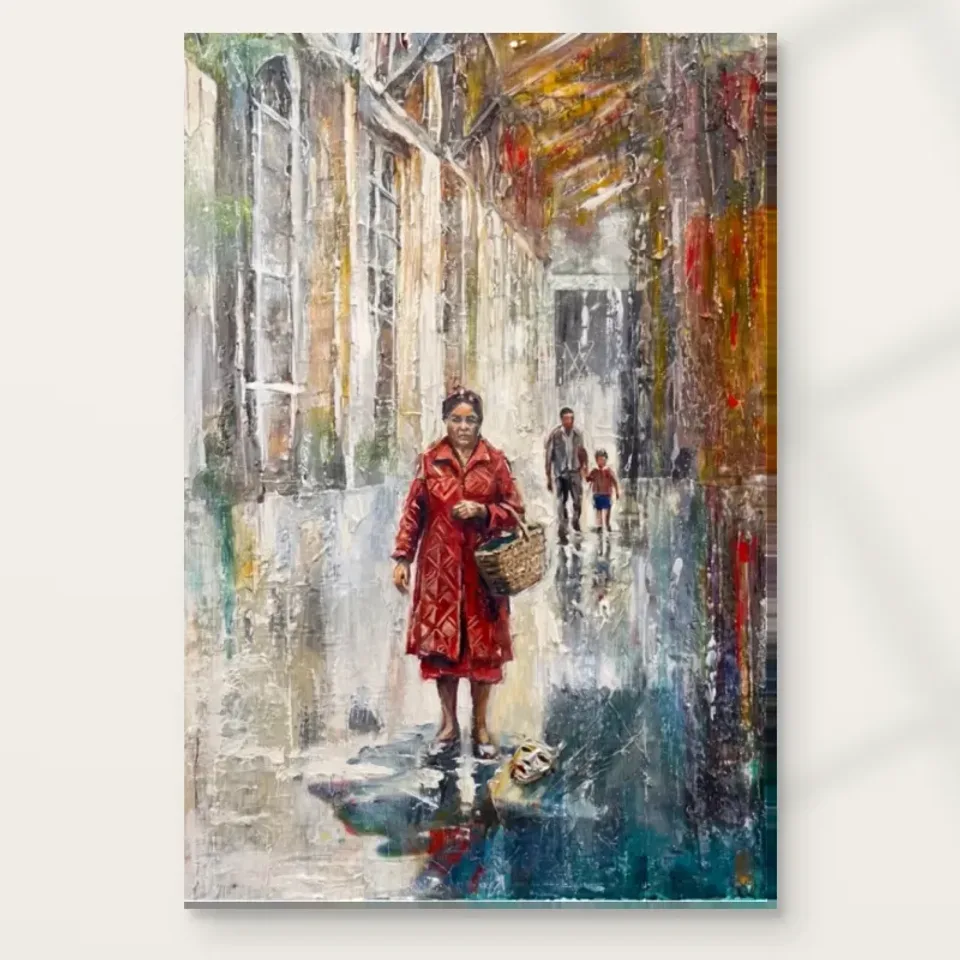
The scene includes details that may prompt different stories, including the mask-like object noted in the existing image description. You do not need to explain a fixed symbolic meaning to people who see the print. A shared room can hold an image that remains partly unresolved. If someone asks, distinguish visible details from personal interpretation. The current information establishes a woman in red with a basket in a layered street, not a verified identity or event. This factual starting point can make conversation more interesting because it leaves viewers room to look rather than asking them to accept an invented account.
Consider whether that openness suits the room and its users. Some households enjoy images that invite questions; others prefer less narrative ambiguity in their principal sitting area. There is no obligation to choose the most puzzling work. If the red figure appeals but a small detail remains unwelcome, compare other figurative or Expressionist prints before ordering. Art for a home should be something you want to encounter repeatedly. The image's ability to start conversation is not a universal benefit if the particular conversation or uncertainty does not interest the people who live with it.
Avoid using the print to make promises about atmosphere or behaviour. It may add warmth, energy or a sense of urban life for you, but it will not automatically make every visitor feel the same way. The room's comfort still depends on furniture, light and practical use. Let the artwork contribute one layer of interest. Its human focus can remain personal without becoming a statement that the whole room must interpret in exactly one manner. This allows the image to stay open while the household remains comfortable with its presence.
Review hand-finishing as an actual selection
The product title includes Hand Finished, but the current finish control decides what is selected for an order. Light selective hand-finishing is optional and separate from an ordinary print. Apparent brushwork in the image does not establish raised paint across the supplied surface. Make this distinction before planning a presentation around an imagined tactile effect. The verified canvas support is Neptune Natural Matt Canvas 400, with 400 gsm cotton, a natural warm base and irregular weave. Compatible poster options include Oyster 271 pearl or satin photographic paper and Photo Lustre 310 photographic paper. Each should be considered as an actual material rather than a visual label.
A poster arrives rolled and unframed, so allow for later framing and its effect on outer size. The manufacturer's Oyster page below is further reading about one paper option, not provenance for the artwork. Canvas can be selected rolled or stretched, with the current configurator distinguishing relevant dimensions, printed allowance and wrap. Do not rely on an old margin example. If you already own a frame or have a precise wall gap, verify the actual fit before ordering. A clear material and measurement review can prevent the artwork's expressive appearance from obscuring the practical details of the object you will receive.
Choose a display location away from avoidable splashes, persistent damp and direct heat. With glazing, check reflected windows and lamps from your normal viewing positions. Canvas has different surface behaviour but still needs a suitable indoor setting. Do not treat a rainy street subject as evidence of moisture resistance. If you need detailed advice for a particular framing or environmental situation, seek it for the actual support and finished object. The image can remain lively and atmospheric within a sensible, stable arrangement that does not test unverified durability claims.
Allow the arrangement to settle into ordinary use
After installation, give the room time before adding more red objects or city references. The coat may already provide all the emphasis you wanted. Notice the work during everyday arrivals, reading or conversation rather than judging only a close photograph of the wall. If the area feels busy, simplify the immediate neighbours. If the print feels detached, reconsider spacing and light before purchasing accessories. A visual relationship can be improved by moving one existing object or clearing one sightline. It does not always require adding more material around an artwork that already contains substantial detail.
Let the room change over time. A moved chair or different textile does not have to undo the print's place. The image can connect through its human subject, its urban atmosphere or the contrast of red with quieter passages. You may notice a different aspect as the surroundings evolve. That flexibility is part of choosing an artwork for more than a temporary colour scheme. It can remain interesting because of its internal relationships rather than because every nearby object has been coordinated to it. A home is not obliged to preserve one display arrangement indefinitely.
The final measure is whether Woman in Red with Basket is clearly seen, practically installed and welcome in daily life. Confirm exact options on the product page and compare Hallway or Living Room alternatives if you are still choosing. Let the figure remain unnamed where the evidence is unnamed, and let the basket remain an everyday detail rather than a decorating command. A good setting gives the image room to offer its particular human city moment while allowing the household's own routines, objects and interpretations to continue around it.
Continue with this artwork
Find your next artwork
Let one red accent carry the hallway
Read more: Let one red accent carry the hallwayRead less: Let one red accent carry the hallway
A Red Basket wall display works when the room serves the figure rather than competes with her. Woman in Red with Basket carries one vivid accent into a layered city, and your job is to give that accent a clear route into daily life. Five rules cover the whole decision.
The rules cost nothing but honesty. Walk the routes, restrain the echoes, measure the finished object, keep the story open and review the finish. Follow them in order, and the picture arrives to a wall that is ready.
Red Basket wall display: meet her on a real route
The red coat registers in a passing glance, while the basket and street details reward whoever stops. A hallway with a natural pause offers both encounters. A corridor without one offers only the flash. Walk your actual routes and notice where feet slow down on their own.
In a sitting room, the rhythm reverses. The long view from a regular chair becomes the main event, and the passing glance becomes the bonus. Wall art with a human figure earns its place through accumulated quiet hours, so weight the seated view heavily when you choose.
Keep her story open in either room. The household does not need to agree on where she is going. An image that invites two interpretations serves a shared home better than one that insists on a single reading.
Red Basket wall display: one red accent is enough
Resist the urge to repeat the coat. The figure supplies the room's red, and every additional red object dilutes her authority. One modest echo at most: a book spine, a small ceramic, a single cushion. Then stop.
The quieter city passages connect with timber, cool neutrals and existing wall tones more gracefully than another shout of red. Let the background do the bonding while the coat does the greeting. A room that relates to the whole image outlasts a room that matched its loudest note.
When you buy wall art with one strong accent, test the echo before trusting it. Place the candidate object near the wall for a week. If your eye keeps leaving the figure for the accessory, the accessory loses. Remove it and enjoy the picture's restored authority.
Seasonal light changes red more than any cooler colour. Winter lamps push the coat toward warmth, while flat summer daylight cools it toward brick. Neither shift is a problem, but both are worth previewing. Stand the test object near the wall at different hours before deciding the echo earns its place. The figure herself will keep changing subtly with the seasons, which is part of her company.
Red Basket wall display: skip the basket theme
A carried basket does not oblige you to buy wicker. Literal props turn a suggestive image into an explained one, and explained images tire quickly. Keep nearby objects functional: a console that holds keys, a tray that catches post, a lamp that lights the pause.
Texture can answer the image without quoting it. Timber grain or a woven throw offers counterpoint to the expressive city marks. Choose one such relationship and leave the other surfaces quiet, because the print itself already carries more texture than most rooms need.
Households with children should weigh the viewing heights honestly. A figure hung at adult eye level towers over a small child, while one hung low enters the physical traffic of play. Neither rules the print out. Choose the wall where her presence suits every height of viewer, and keep the lower edges clear of toy storage and charging cables.
Red Basket wall display: size the finished object honestly
Measure with the room in full use. Open the hallway doors, pull the chairs out, switch the lamps on. Then tape the complete outline of the finished object, frame included if a poster route is planned. The image size in the configurator is only the beginning of the footprint.
The red figure survives a modest size, while the street details ask for closeness. Decide which encounter the room will actually offer before defaulting to the largest option. A smaller print near a chair can outperform a grand one above an obstacle course.
Leave practical clearances that respect daily life. Coats brush, doors swing and bags swing wider. A position that forces the household to tiptoe around the picture will be resented by spring. This artwork deserves a wall it can relax on, and so do you.
Recruit a second person for the outline stage. One holds the tape or paper while the other checks from the real seats and doorways. Solo measuring quietly biases the height toward wherever your own eye happened to be. Two viewers catch the awkward angle in minutes that one viewer finds only after the holes are drilled.
Red Basket wall display: clearances come first
Match fixings to the wall construction and the finished weight, with margin to spare. A secure, level object disappears from your worries. An improvised hook becomes a small daily anxiety that no image can out-charm.
Keep the print clear of splashes, persistent damp and strong direct sun. Ultraviolet light fades pigments quietly, and the science of that fading is worth two minutes of any owner's time. Indirect daylight keeps the red honest for years.
Colour temperature in the room shifts her presence through the day. Warm evening lamps pull the coat forward until she nearly leaves the frame, while cool morning light settles her back into the street. Preview the taped outline at both extremes before drilling. The wall that flatters her at breakfast and at midnight is the wall that earns her for the decade. Trust the outline's quiet evidence over any first evening of excitement.
Red Basket wall display: keep the story open in company
Guests will invent errands for her, and that is the picture working. Let the conversations wander without confirming any of them. The visible facts are a woman in red with a basket in a layered street; everything beyond that is interpretation, and interpretation is the gift.
Consider honestly whether your household enjoys that openness. Some families love an image that starts conversations. Others prefer the principal room to hold fewer questions. Neither preference is a flaw, but the picture will practice its openness daily, so choose it only if the daily mystery appeals.
Never let the print make promises for the room. It may bring you warmth and urban energy, but comfort still comes from chairs, light and people. The figure contributes one strong layer. The room's remaining layers remain your own work.
The figure also travels well as a gift, precisely because her story stays open. A recipient can place her in a hallway, a study or a sitting room without the image demanding a particular interior. If you are buying for someone else, choose the size for their smallest plausible wall rather than their grandest. Versatility is the courteous choice.
Red Basket wall display: review the finish before ordering
Hand Finished is only the product family name, not a contents label for each order. Where offered, the selective finish remains a separate optional addition. The piece otherwise stays a standard print rather than hand made wall art, and the depicted brushwork stays inside the image whatever you select.
The stated canvas option uses a warm cotton support with a matt surface that flatters the layered greys; the manufacturer's canvas specification covers that material in detail. Poster papers suit a separate framing plan and arrive rolled. Each route produces a different finished footprint, so choose the route before measuring the gap.
Confirm format, size, presentation and finish in one careful pass through the configurator. Then schedule any framing before the print arrives. A clear order is what lets the image stay gloriously unclear.
After the first season, look at the arrangement the way a guest would. Note whether belongings have crept into her sightlines or a lamp has migrated across her view. One small restoration usually returns the balance. The figure asks little of a room, but she does ask that her one strong accent never gets quietly buried.
Frequently asked questions
Does the red coat require a red room?
Not at all. One concentrated accent reads as a gift in a neutral room and as a shout in a red one. Keep her as the room's only strong red note, and the palette around her can stay exactly as it is today.
Will she overwhelm a small hallway?
A small hallway with a genuine pause point suits her well. Measure the finished outline and confirm the passing clearance. If shoulders brush the wall daily, choose a different wall rather than a smaller life for the picture.
Does this print qualify as hand made wall art?
No, and the depicted brushwork remains inside the print regardless. The selective finish, where chosen, contributes a few light accents only. The configurator lists precisely what each version includes.
How high should she hang?
Let the main viewing position lead. In a sitting room, that is the seated eye. In a hallway, it is the standing one. Tape the outline and check it morning and evening before any drilling begins.
Does the basket need explaining to guests?
Never. The image documents a figure with a basket and nothing more. Let guests invent the errands. A picture that starts different conversations on different evenings is doing exactly what it was chosen to do.
When should I buy artwork for an entrance route?
Buy artwork for an entrance after walking the route with the outline taped. The figure should greet you without demanding you stop. If the flash of red pleases you daily for a week, the position has earned the print.
Can she share a wall with other pictures?
She prefers not to. A strong figurative accent deserves her own wall, with quieter company elsewhere. A gallery arrangement around her dilutes the single bold relationship that makes the image work.
How do I clean the print?
Nothing beyond a dry, soft duster is required, and moisture must stay away from the face. Where glazing sits in front, wipe the glazing only. The depicted texture needs nothing beyond ordinary gentleness.
Does she suit a bedroom?
That depends on your household's taste for figures in restful spaces. Her palette is warm and her story is calm, which many bedrooms welcome. If a watching presence troubles your sleep, trust that instinct and choose a landscape instead.
When is the right time to buy wall art with a strong figure?
Buy wall art of this kind when a room needs exactly one human presence. A quiet space lets her anchor it. A crowded one turns her into another voice in an argument, and she deserves better than that.
Does the frame colour matter?
A simple dark or neutral frame keeps attention on the coat. Anything red or ornate competes with the accent that carries the whole image. Give the boundary a quiet job and let the figure keep her authority.
What if my household disagrees about her?
Disagreement is useful data. Live with the taped outline for a week and count the unprompted comments, kind and unkind. A picture that sparks discussion before purchase usually keeps rewarding it after.
Conclusion: the Red Basket wall display's five rules
Run the five rules once more: the real route, the single accent, the honest size, the open story and the reviewed finish. A Red Basket wall display that passes all five will greet you for years. The product page lists current formats, and the Red Basket composition guide goes into the image itself. To round off, weigh placement ideas for the hallway and living room, and add the total cost guide before you order.