Living with art
Choosing a Private or Shared Setting for Blindfolded Whisper
Plan where an intimate two-figure artwork belongs in your home, considering shared-room comfort, doorway views, evening use and the difference between a personal picture and a public focal point.
Whose everyday view would include Blindfolded Whisper?
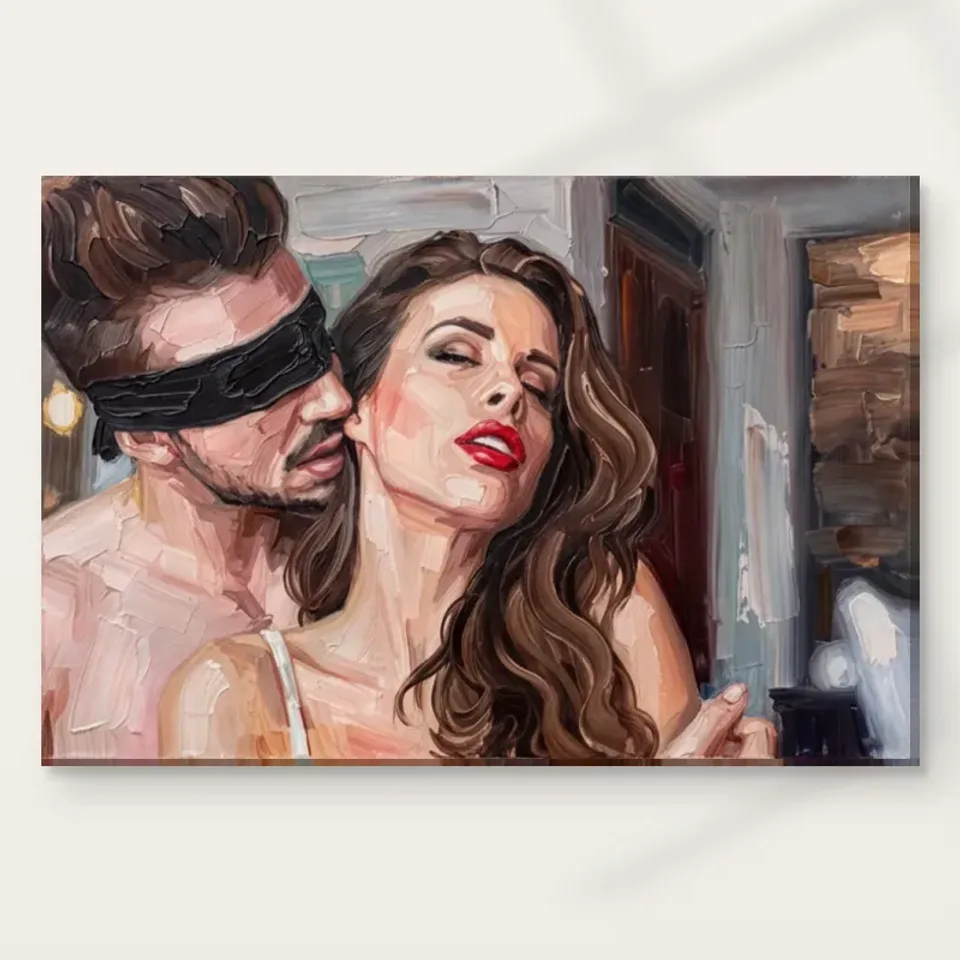
An intimate image raises a practical question before it raises a decorating one: who will encounter it most often? Blindfolded Whisper depicts two close figures, including a blindfolded man, and its subject may feel more personal than a landscape or abstract pattern. In a room shared with a partner, family or housemates, discuss the image itself before deciding that it would suit the wall. Agreement about colour is not the same as agreement about subject. Someone may appreciate the warm expressive appearance but prefer not to meet that particular encounter every day from their usual seat or on entering the home.
This is not a reason to avoid figurative art in a shared room. It is a way to make the eventual placement intentional. Ask which views should include the picture and which might remain quieter. A wall beside a favourite chair can offer a more chosen encounter than the wall directly opposite the main entrance. A private bedroom and a shared living room also have different audiences, but neither label dictates a single answer. The useful starting point is the people and habits involved. The work will join a lived environment, not an anonymous room whose only purpose is to display it.
Review Blindfolded Whisper sizes, media and finish options
Control the first glimpse from the doorway
Walk towards the room from the normal approach and notice what becomes visible before you cross the threshold. A picture can function as an immediate announcement, a partial glimpse or a discovery after entering. For Blindfolded Whisper, that difference may matter more than whether the print is perfectly centred on a wall. If you want the intimate subject to remain part of the room rather than the whole home's first impression, consider a wall that is less exposed from the entrance. This lets you enjoy the image without making every arrival, delivery or passing view into an encounter with its central subject.
Use a temporary outline to check the proposed position, then step back into the actual approach route. Account for a door that is normally left open and for furniture that partly interrupts the view. Do not assume that a narrow glimpse will remain narrow when the print is installed at a different height. If you prefer the work to be prominent immediately, make that a conscious choice and keep surrounding interruptions modest. Either approach can work. The point is to decide how public the picture should be within your own home before a convenient empty wall makes the decision on your behalf.
The bedroom is a possibility, not a prescription
The existing product copy suggests a bedroom, but an intimate subject does not automatically belong above a bed. Consider the experience of looking from the bed as well as the view of the bed from the doorway. Opposite the pillows, the image becomes a direct waking and evening view. Above the headboard, it may be more visible when entering than when resting. A side wall can provide a less insistent relationship. These alternatives allow you to choose the portrait's role rather than treating the bed as the compulsory centre of every bedroom art arrangement, particularly if the room also contains a desk or reading area.
Think about the room's emotional variety. A bedroom may be used for sleep, dressing, quiet reading and occasional work, not only as a romantic setting. The picture does not need matching themed objects to justify its presence. It can sit beside ordinary furnishings and remain an artwork with an open meaning. If two people use the room, compare their preferred viewing positions and discuss the blindfold motif specifically. A comfortable shared decision is more important than a convention about where intimate art should hang, and it is easier to reach before committing to a frame, fixings or a tightly measured space.
In a living room, make space for a second conversation
A living room often needs to support conversation between people as well as attention to an image. If Blindfolded Whisper sits directly behind the main seat, some guests may experience it as part of looking at the person seated there. On a side wall, it can be something discussed when someone chooses to turn towards it. Neither arrangement is inherently unsuitable, but they create different social relationships. Consider whether you want the artwork to be a frequent conversation starter or a quieter personal presence that shares the room with books, music and the ordinary activity of spending time together.
Check the picture from every regularly used seat, not just the sofa that appears most prominent. A close figure image may be partly obscured from a low chair or cut across visually by a standing lamp. If a favourite seat offers only an awkward edge view, you can choose to prioritise it differently or relocate the work. Do not try to make every chair face the picture like a small cinema. The room should remain usable for people looking at one another. A well-placed artwork participates in that setting without requiring the furniture to behave as an audience arranged permanently before it.
Explore art for shared living rooms
Use warm materials without building a theme
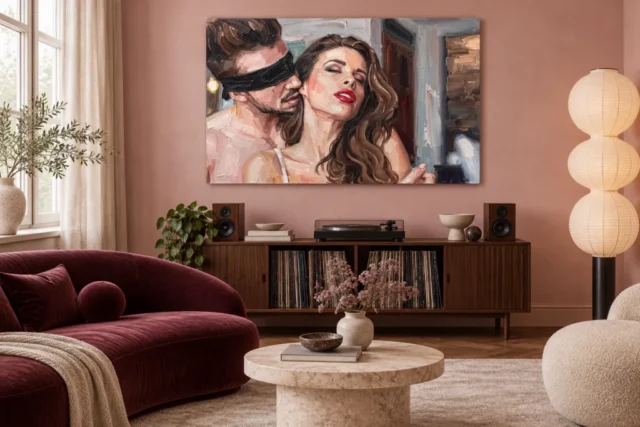
The work's warm palette may connect with wood, leather, muted textiles or existing deeper colours, but it does not require a fully warm-coloured scheme. Begin with one relationship already present in the room. Perhaps a chair provides a darker anchor beneath the image, or a wooden surface gives it a quieter neighbour. You are looking for a compatible level of visual activity, not proof that the materials in the room reproduce anything physically present in the artwork. Its expressive painted appearance remains an image; the surrounding furniture has its own actual surfaces and practical functions within the space.
Avoid surrounding the work with objects chosen solely to label it as romantic or mysterious. The two figures and concealed gaze already supply enough narrative suggestion. A cluster of themed accessories can make the image feel less open and turn a personal response into a decorative instruction. If you want a colour echo, keep it limited and movable at first. The red detail identified in the artwork can be acknowledged by a small object elsewhere, but it does not demand several red cushions or a new painted wall. Leaving some difference between image and room gives both a clearer identity.
Could a mirror make this intimate image more public than intended?
Mirrors deserve a specific check because they can make the artwork visible from places you did not intend. A mirror near a dressing area or opposite a doorway may repeat the intimate subject into a hallway or another part of the room. This can be welcome, but it can also defeat a deliberate choice to place the work on a more private wall. Walk through the relevant routes and inspect the reflection from ordinary standing positions. You do not need to remove the mirror; you need to understand the extra sightline it creates before deciding the picture is tucked away from the entrance.
The reflection can also affect visual emphasis. A repeated face or warm colour patch may compete with the original picture, especially in a small room. If that feels excessive, change the mirror angle where practical or choose a different wall for the print. Avoid placing a lamp so that it produces a bright reflected interruption across a glazed presentation. These are ordinary spatial decisions, not rules against combining mirrors and art. With a two-figure work, however, doubling the encounter can be more noticeable than doubling a simple field of colour, so it is worth assessing deliberately rather than discovering the effect after installation.
Remember that a mirror's effect changes as a person moves. A reflection absent from your favourite chair can become prominent while crossing the doorway or standing at a wardrobe. Include those moving views in the trial. This is especially helpful when the intention is to keep the work available for deliberate attention rather than making its subject visible from every route through the room.
Work out the complete boundary before hanging
Select the intended format and presentation before measuring a final fit. Poster options are supplied rolled and unframed, so a future mount and outer frame can enlarge the footprint. Rolled canvas also needs a later presentation decision, while the stretched option has its own current configurator details. A close two-person composition can feel particularly different when given a broad border or placed directly into the room's visual field. Ask which effect you prefer, then measure the actual finished dimensions rather than relying only on the image area quoted for the selected artwork size or on its apparent proportions in a room scene.
The Hand Finished wording in the title is not an instruction to assume every order includes hand-applied finishing. Check the option you actually select. Likewise, represented brushwork is not a specification for physical paint relief. These distinctions help when discussing the job with a framer, because the supplied print medium and finish matter to handling and presentation. Leave suitable clearance from furniture and moving doors, and use hardware matched to the finished item's weight and wall construction. If the chosen location is above a bed or regularly used seat, take particular care to obtain an appropriate secure installation rather than treating the visual position as the only consideration.
Test the quiet lighting you really use
An image selected for an intimate setting will often be viewed under modest evening lighting. Assess it under those conditions, not only under bright daytime light. The figures should remain readable without a lamp shining directly into the viewer's eyes or reflecting across the image face. If you plan a glazed poster, look from seated and reclined positions as well as from standing height. Reflections shift with the viewpoint. A location that appears clear while hanging the picture can be much less comfortable from the bed or armchair where you will spend most of your time in the room.
Keep environmental care separate from the mood of the display. Low-key lighting does not mean the artwork should be placed beside candles or exposed to heat. Avoid direct sun, strong temperature changes and likely splash areas, and follow the care advice for the actual supplied medium. General conservation reading can explain common display risks but should not be treated as permission to use painting-cleaning methods on a print. If the room's lighting makes the work difficult to see, reconsider the lamp direction or wall location before increasing intensity. A subtle, usable arrangement is more valuable than a dramatic one that creates glare or unnecessary exposure.
Use the visualisations as alternatives, not evidence of a right answer
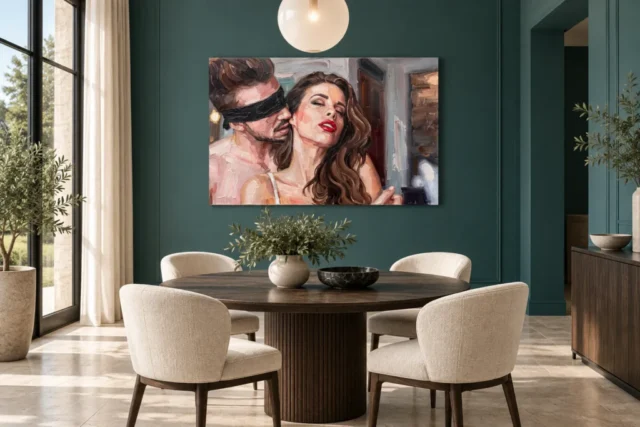
The existing room scenes show that an intimate figurative work can be imagined within different interiors. They do not establish an actual customer's installation, precise print scale or included furniture. Compare the visualisations by asking what changes in the artwork's role. Does it seem like a personal encounter, a larger colour statement or one component in a social room? Then return to your own wall, where doorways, seating and shared preferences are real constraints. The useful result is an informed question about your space, not an obligation to imitate a pictured interior that was never designed around your household's routines.
A photograph of the proposed wall can help if you take it from a normal viewing position and keep the selected print proportions honest when planning. Do not enlarge the imagined artwork beyond available dimensions just to fill a gap. Include the objects that usually live nearby rather than clearing everything for a flattering photograph. The living arrangement must work with a lamp plugged in, a chair pulled out and a door opened. If the subject remains welcome and legible under those conditions, you have stronger evidence for the location than a carefully staged view that temporarily removes the room's everyday demands.
Let the picture remain personal without becoming compulsory
Once the work is placed, it does not need an explanatory speech for every visitor. You can describe its visible figures and expressive appearance without claiming a definitive story or making it a statement about your own private relationship. If someone responds differently to the image, that does not automatically invalidate your choice. The practical question is whether the people sharing the home remain comfortable with its daily presence. Keeping a thoughtful distinction between personal enjoyment and compulsory attention can make an emotionally suggestive work easier to live with over time, especially in rooms that welcome different kinds of company.
Revisit the placement after the room has been used normally for a while. Notice whether an overlooked reflection exposes the image more widely than intended, whether a favourite seat provides a good view and whether the lighting preserves the figures' relationship without glare. Changes need not be extensive: moving a lamp or one nearby object may clarify the encounter. Blindfolded Whisper is most convincingly integrated when its closeness has an appropriate place in the household's own pattern of public and private views. The result should feel like a considered personal choice, not a room arranged around a stereotype of what intimate art is supposed to require.
Continue with this artwork
Find your next artwork
Choose a private or shared setting
Read more: Choose a private or shared settingRead less: Choose a private or shared setting
A Blindfolded Whisper wall display poses a practical question ahead of any decorating one: who will meet this picture most often? The image shows two close figures, one of them blindfolded, and its subject may feel more personal than a landscape or an abstract pattern. That character should guide the placement from the start.
Where a room is shared with a partner, family or housemates, talk through the image itself before deciding that it suits a particular wall. Agreeing on colour is not the same as agreeing on subject. One person may appreciate the warm expressive appearance yet prefer not to meet that particular encounter every day. This guide works through the two kinds of room, private and shared, and the checks each one deserves.
Blindfolded Whisper wall display: decide whose everyday view it joins
Begin with the people and the habits involved, because the work will join a lived environment rather than an anonymous showroom. Ask which sightlines should include the picture and which could stay quieter. A wall beside a favourite chair gives a more deliberate encounter than one directly opposite the main entrance.
Neither a private bedroom nor a shared living room dictates a single answer. The useful starting point is simply honest: who sits where, who passes which doorway and who wants this image in their daily sightline? Once that is clear, the physical checks become straightforward. This is no reason to avoid figurative art in shared rooms. It is a way to keep the eventual placement intentional rather than accidental.
Control the first glimpse from the doorway
Walk towards the room along its normal approach and notice what comes into view before you cross the threshold. A picture can work as an immediate announcement, a partial glimpse or something discovered only after entering. For an intimate subject, that difference may matter more than perfect centring on the wall.
Use a temporary outline at the proposed position, then step back onto the actual approach route. Allow for a door that is usually left open and for furniture that partly blocks the view. If you prefer the work to greet every arrival, make that a conscious choice and keep the surrounding wall calm.
Blindfolded Whisper wall display: treat the bedroom as one possibility
The existing product copy suggests a bedroom, yet an intimate subject does not automatically belong above a bed. Weigh the experience of looking from the bed alongside the view of the bed from the doorway. Hung opposite the pillows, the picture turns into a direct waking and evening sight. Above the headboard, it may be more visible on entering than while resting.
A side wall provides a third, less insistent relationship. These alternatives let you choose the picture's role instead of treating the bed as the obligatory centre of every bedroom arrangement, particularly when the room also contains a desk or a reading area.
Blindfolded Whisper wall display: agree placement before fixing
When two people use the room, weigh their preferred viewing positions and talk about the blindfold motif specifically. A comfortable shared decision comes more easily before committing to framing, fixings or a tightly measured space. It is also more durable than any convention about where intimate art should hang.
Keep the room's emotional variety in mind as well. A bedroom serves sleep, dressing, quiet reading and occasional work, not only romance. The picture can sit among ordinary furnishings and stay an artwork with an open meaning, without themed objects to justify its presence.
Blindfolded Whisper wall display in a shared living room
A living room must sustain conversation between people as well as attention to an image. If this work hangs directly behind the main seat, some guests may register it as part of facing the person seated there. On a side wall, it becomes something discussed when someone chooses to turn towards it.
Neither arrangement is inherently unsuitable, but they create different social relationships. Check the picture from every regularly used seat, not just the most prominent sofa. A close figure image can be partly hidden from a low chair or sliced through visually by a standard lamp, and a favourite seat with only an awkward edge view is worth discovering before installation.
Blindfolded Whisper wall display: watch the mirror's extra sightline
Mirrors deserve a specific check because they can carry the image into spots you did not intend. A mirror near a dressing area or facing a doorway may carry the intimate subject into a hallway. Walk the relevant routes and inspect the reflection from ordinary standing positions before you consider the picture tucked away.
The reflection can also compete with the original. A repeated warm patch may pull attention in a small room, so adjust the mirror angle where practical or choose a different wall. With a two-figure work, doubling the encounter is more noticeable than doubling a simple field of colour.
Blindfolded Whisper wall display: measure the complete boundary
Choose the intended format and its presentation before measuring for the final fit. Poster options arrive rolled and unframed, so the later mount and outer frame will enlarge the footprint. Rolled canvas needs a later presentation decision, while the stretched option carries its own current details in the configurator.
A close two-person composition can feel noticeably different when given a broad border. The National Gallery's explanation of picture frames describes how surrounds have shaped the meeting between picture and room for centuries. Measure the actual finished dimensions rather than relying on the quoted image area or on apparent proportions in a room scene.
Choose the presentation before the final fit
The Hand Finished wording in the title does not mean every order includes hand-applied finishing; check the option you actually select. Represented brushwork is not a specification for physical paint relief either. These distinctions matter when you discuss the job with a framer, because the supplied medium and finish shape the handling advice.
Leave enough clearance from furniture and moving doors, and choose hardware suited to the finished piece's weight and the wall's construction. If the chosen location sits above a bed or a regularly used seat, take particular care to secure the installation rather than treating the visual position as the only consideration.
Blindfolded Whisper wall display: test the light you really use
An image chosen for an intimate setting will often be seen under modest evening lighting. Judge it in those conditions, not only in bright daylight. The figures should stay readable without a lamp shining into the viewer's eyes or reflecting across a glazed face. Reflections shift with viewpoint, so look from seated and reclined positions as well as standing height.
The Canadian Conservation Institute's basic care guidance notes that direct sunlight and prolonged strong light cause fading that cannot be reversed. It also advises steady temperature and humidity, away from radiators and fireplaces. That is general background for any displayed piece; the care advice supplied with your chosen format stays authoritative.
Review the placement once the room has been used normally for a few weeks. Notice whether a missed reflection exposes the image more widely than planned, whether a favourite seat gives a good view and whether the lighting keeps the figures' relationship free of glare. Changes need not be extensive; moving a single lamp or one nearby object may clarify the encounter. The picture feels most convincingly at home when its closeness has a fitting place within the household's own rhythm of public and private views.
Buy wall art with the household in the decision
When you buy wall art with a personal subject, the household's comfort is part of the specification. If you buy artwork for a shared room, let the people who live there see the image first. The bedroom artwork selection and the living-room artwork selection offer calmer alternatives if the encounter proves too specific for a social wall.
Artwork of this kind does not become hand made wall art through its title alone, so let the listed options settle that question before ordering. Wall art that everyone has agreed to meet daily will outlast a dramatic first impression. The Blindfolded Whisper composition guide remains the place to study what the image itself actually shows. For the budget side, the ready-to-hang cost comparison separates the quoted option from any framing or fitting you add later, which keeps the wall plan honest.
Frequently asked questions
What are the two kinds of room in a Blindfolded Whisper wall display?
Private rooms such as bedrooms and shared rooms such as living rooms. Each kind has a different audience, so the guide tests the doorway glimpse, the seating plan and the evening light in both.
Must an intimate image hang in a bedroom?
No. The bedroom is one possibility, not a prescription. A side wall there offers a quieter relationship than the wall opposite the pillows, and a living room can work when the household welcomes the subject.
How do I keep the picture from greeting every visitor?
Place it on a wall that is less exposed from the entrance, and check the approach with the door in its normal position. A partial glimpse on arrival keeps the encounter chosen rather than constant.
Is the Hand Finished title the same as hand made wall art?
No. The wording does not guarantee hand-applied finishing on every order. Check the specific option you select and read what the finish changes before relying on it.
Can a mirror really change the placement?
Yes. A mirror can repeat the image into a hallway or another part of the room, making a private choice more public than intended. Inspect the reflection from ordinary standing positions before finalising the wall.
What lighting suits the evening view?
The modest lighting you already use, tested from the seats you actually occupy. Avoid glare across a glazed surface, and avoid increasing intensity when a better lamp direction or position would solve the problem.
Is the wall above a bed safe for a framed print?
It can be, provided the installation matches the item's weight and the wall's construction. Above beds and regularly used seats, secure fixing deserves particular care rather than visual convenience alone.
Should the room echo the picture's warm colours?
One modest warm echo is usually enough. Wood, leather or muted textiles already in the room can provide it, and a cluster of themed accessories tends to make the image feel less open rather than more at home.
What if my partner dislikes the blindfold motif?
Treat that as decisive information rather than a problem to argue away. Discuss the motif specifically, and choose a different image for the shared wall if the encounter remains unwelcome.
Do the room scenes show a real installation?
No. They are visualisations that help you imagine roles for the work, not records of customer installations or precise print scales. Measure your own wall for any final decision.
Which facts should I check before ordering?
Confirm the medium, the dimensions, the presentation and the finish in the configurator. Then photograph the proposed wall with a measured outline and view it from your usual seat once more.
Can the picture stay personal without explanation?
Yes. It needs no explanatory speech for every visitor. If someone responds differently to the image, that does not invalidate your choice, provided the people sharing the home remain comfortable with its daily presence.
Conclusion: give the encounter its chosen place
Decide first whose view the picture joins, then control the doorway glimpse, the mirror and the evening light. When those checks are settled, the placement will feel considered rather than accidental. See Blindfolded Whisper on its product page and weigh the stated medium, size and finish against the role you have chosen for it.